Showing posts with label nostalgia. Show all posts

Sunday, January 18, 2026

Let period pieces be period pieces: On the republication of Una & Miguel


I love watching ’90s and 2000s Filipino movies centered around a younger cast, whether it’s a teen movie, a rom-com, or horror. Of course the ideal scenario is that I would find them actually kind of good, but the quality doesn’t usually end up mattering—I have a surprising amount of patience and willpower to sit through the entire thing, provided that the locations catch my eye. It’s endlessly fascinating to me to watch intently for places I recognize, places that no longer look the way they used to when I was growing up, places I miss, places I wish I’d known about. The newly opened Market! Market! in Say That You Love Me (2005), a whimsigoth cafe in Kutob (2005), the indoor amusement park Dreamscape in Now That I Have You (2004).

For me it’s a form of virtual time travel, a chance to revisit a version of Metro Manila that doesn’t really exist anymore. Captured on film, standing the test of time. They obviously can’t be changed, becoming unintentional period pieces (and unintentional odes to the era’s obsession with banana yellow and boho-chic). It’s different with books; the words can be edited to reflect what’s current and trace the shifts in how we live and how we are, disregarding the cultural climate the book was a product of in the process. 

But why would we want to? 

Published in 2002, Lilledeshan Bose’s Una & Miguel is the rare breed of early Filipino YA in a time when young adult readers weren’t even really acknowledged as a major publishing demographic yet. The title characters have a meet-cute when Miguel almost runs Una over with his Vespa, and there’s an immediate attraction, but it gets a little complicated because he’s with the popular crowd and she’s one of the outcasts. 

Not the most original premise, but its charm is that it’s set not (technically) in the halls of high school, but in a village during the summer. I read it the summer after sophomore year, when I had an almost-thing of my own with someone who also belonged in different social circles, who was never supposed to be someone I could grow close with, let alone share a pair of earbuds with, our heads tilted close together as we listened to some pop-punk ballad, both too afraid to move to ruin the moment.

Anyway. It didn’t end up helping me navigate this thing, but it did leave me with an insufferable tendency to refer to people who “conformed” as “sheep.”  


My cousin and I discovered our copies of Una & Miguel as a forgotten should’ve-been-classic, tucked away on the Filipiniana shelves of National Book Store’s Shangri-La branch (RIP) and marked down to a whopping P50. And when I say tucked away, I mean literally tucked away: the spine is a nondescript all-black, so you wouldn’t even know what it was until you pulled it off to look at the cover. The hidden gem of all hidden gems. 

But it wasn’t as forgotten as we’d thought, because in 2012, Una & Miguel received a second edition, this time no longer pocket-sized, and with an actual spine. The paper was no longer a very thin muddy pulpy gray consistent with recycling (was this a meta-reference to how they would end up working together at a paper recycling shop?! probably not, but that’s my headcanon now), and the text is a cute magenta! Despite being reprinted ten years after its first edition, though, this wasn’t labeled as an anniversary edition, more like it was just repackaged to be new. Young adults were finally considered a major demographic as readers, after all. 

The problem was, it just didn’t feel the same. 

And none of it was because of the redesign at all. The text, the characters, the plot, they all remained largely unchanged, as well. But Una & Miguel was defined by its pop culture references as it was by these elements. Its references are embedded in the identity of its characters: their tastes become their social currency, and that’s exactly what the plot is all about, isn’t it? Miguel and his “cohorts” might be popular, but it’s not hard to tell that Una and her friends are infinitely cooler and more secure in themselves. I don’t know what I would do with myself if I opened up a copy of Meg Cabot’s All American Girl and found that Sam’s penchant for drawing her best friend horseback riding with Heath Ledger had been backspaced to the ether.

I’ve been thinking about this for years, and now I’m finally doing it: I’ve scanned (as in re-read, but also as in used a scanner on) both my copies of this book, and I’ll be making observations on the changes they’ve made. I never meant for this to be a literal close reading/analysis of the characters and the text, but it turns out my inner English major never really left. (But also, a lot of this is just me being like “this is cool” and “this is not cool.”) 


When we first meet Una, she pretty much immediately drops a proto-stan list, which couldn’t have been a more fitting introduction. She’s a harmonica player, an aspiring filmmaker. I think the switch from Ani DiFranco to Up Dharma Down works, and I love that the Some Kind of Wonderful mention stuck around. Going from Josh Hartnett to Chris Hemsworth is a Choice, and so is not replacing Brandon Boyd. 

I miss when Beauty Bar ruled our (dream) vanities. Now that I can actually afford stuff from there and Essences, all of the fun brands I’d always wanted to try are gone. The Body Shop’s also kind of on its way out now, so today Una would probably say she’s never ordered anything from Issy and Company. 


There is mention of what year it was, and they did move it up to the “present.” A decade is a long time, reflecting changing cultures especially since our relationship with the internet shifted rapidly between 2002 and 2012. The social dynamics were different, particularly when it came to ideas of nonconformity and self-expression—but we’ll get to that. All that said, casually changing the setting like this has a bigger effect on the book than one would think.

(I also found the choice not to change “anklet shopping” funny, since they’re a decidedly early-2000s fashion statement.) 


Miley Cyrus starred in a Nicholas Sparks movie and has been recognizable as both a blonde and a brunette, so she and Mandy Moore might have more in common than I thought.

I resisted K-pop as much as I could as a teenager, only ever learning certain things through pop culture osmosis as I kept up with friends’ interests, so I probably would’ve glossed over the mention of it here. Now, though, I see it as very apt, and if the first edition had just been published a year later, the boy bands definitely would’ve been F4 and “Asian/Koreanovelas” instead.

It’s charming that they kept Marcel Marceau—this nod to a 20th-century mime artist would be just the kind of character quirk that wouldn’t be out of place on someone with a Livejournal or a Tumblr account. It also reminds me of the main character’s obsession with an old-Hollywood actress in Why We Broke Up (disclaimer: not a book I think too highly of), which I read in 2012.


I love this part for how accurate it is in describing very specific Filipino youth social hierarchies and nuances. It brings me back to the nonsense conversations I would have with friends over lunch in college, many of which revolved around these same observations since UP at the time fostered this exact ecosystem. I don’t really know how all this would hold up today, but writing this now, it does make me wonder. 

During the edit these paragraphs were mostly unchanged, and what stood out to me was the fact that they kept even “sosy.” The newer edition added an extra S and italicized the word, but that doesn’t really change the fact that nobody was still saying it in 2012.


I was 8 in 2002, and we lived comfortably but not with a whole lot, so I didn’t always get what the characters were talking about right away. One thing I had to look up was what the hell an “MD player” was, and it turned out to be a MiniDisc player. It was one of those cool in-between tech innovations of the decade—more convenient than CDs, but largely forgotten because MP3 players came not long after. So it makes sense that Miguel’s MD player was switched out for an iPod. 

My mom was in her late 30s in the 2000s, and she was young enough that she still cared deeply about music and splurged on original CDs. She was an early believer of John Mayer and Jason Mraz, and the mention of Sugar Ray here has me smiling because she loved “When It’s Over.” Anyway, I think the selection of artists in both editions represent the two periods well. (And the 2012 ones are also kind of funny, because it’s like, okay, indie girl.) 


Nothing much to say here other than “neo-feminist” being added in 2012 alongside “anti-imperialist,” which speaks to me again as someone who educated myself a lot on the movement and intersectionality at the time. Say what you will, but Rookie did so much in terms of empowering young women to embrace, learn more about, and embark on their personal journeys with feminism, and this includes giving them the voice and agency to launch their own webzines. 


VCDs are kind of on the same boat as MD players, not as popular or nostalgic as VHS tapes and DVDs, but they were pretty common in my house because they were cheaper to get authentic. Not to go on another parent-related tangent, but I got my last VCD in 2008—a copy of 10 Things I Hate About You that I asked for after watching an hour-long broadcast about the life and career of Heath Ledger, who had recently passed. My dad got it for me at the Video City in SM North. (What a time.) 

Another VCD memory: watching horror movies late at night and my cousins and I pointing fingers and arguing because we were all too scared to get out of bed to replace Disc 1 with Disc 2. 


Another one of my favorite parts, where Miguel compares and contrasts our main girl with sosy, sweet, and safe Tonette, the Pathy to Una’s Carson. It tells us a lot about how he perceives the world around him and what he considers important, even if it’s just about the girl he has a crush on. (Obviously not Tonette, and it’s not even close.) 

I think the Osbournes reference definitely should’ve been switched out since the show had stopped airing seven years ago in 2012, and it doesn’t really have cult-classic status. It could’ve been “like Cassie Ainsworth minus the hang-ups” or “like Violet from American Horror Story, but better,” but both are a little too edgy. Maybe Awkward or Suburgatory or Kat Dennings circa Nick & Norah or 2 Broke Girls? The Miley of this period doesn’t quite match Tonette’s characterization either since she would’ve been in her wild-child phase, but “Blake Lively, not on Gossip Girl, but in Sisterhood of the Traveling Pants” would’ve fit right in. 

“Is a dean’s lister but doesn’t have much of an opinion” is way more powerful storytelling to me than the change to Camus, and it’s one of the edits I really didn’t like. 


The text-speak in the original edition cracks me up, and it was great attention to detail to edit it out in the newer edition since it might be the most glaringly reflective of how much has changed in a decade. More than anything, it makes me think about how in sixth grade, my best friend at the time had an “Anti-TXTSPK” Friendster page. And how my mom’s texts never let this typing style go all the way through to 2021, and how dear that was to me.

Some more interesting changes and references I took note of that I chose not to scan: burning CDs, Mango always being replaced with Zara, Tropical Hut (which wasn’t edited out, I just love Tropical Hut and it was cool to read), the slang “exag.”

Revisiting the two versions of this work had me wondering if Bose herself had done the edits necessary to prepare it for republication. Based on my work and what I know about publishing, the answer should be a simple yes. She’d been editorial assistant at Seventeen and evidently knew what was cool in 2002, and I would’ve assumed that the same would be true ten years later because it’s all a matter of taste. 

Her taste was still evident in certain parts, especially when it came to music, but it no longer felt like her finger was on the pulse of the zeitgeist. The characters were suddenly not as 100% in tune with the genuine 2012 teen experience, even if it was small things like teen heartthrobs. Chris Hemsworth wasn’t quite Candy Cutie material, but Josh Hutcherson or Robert Pattinson were. 

Another thing I’m thinking about is: Would another refresh of Una & Miguel work today? Are there any more cool rock bands? Would Miguel be into Wallows and Geese (I hated typing these I have no fucking clue what local straight men listen to) and have thousands of Instagram followers just because he has a Vespa and that face? Would Una be listening to Soccer Mommy, Mitski, and Japanese Breakfast, and would she be a secretly popular NCT stan account? Am I just projecting and treating this as a fun creative thought exercise? Yeah, probably.

But this leads me to my answer: a mid-2020s (how the fuck are we mid-decade already) version of Una & Miguel would never work, just like the 2012 version was already barely working. They would live too differently, their DNA would have to be rewritten completely. These are not people who should know what the Omegaverse is.  


An example I keep coming back to is Jerry Spinelli’s 2000 novel Stargirl, a celebration of nonconformity and staying true to yourself and what makes you happy. Its title character wore long dresses, played the ukulele, and chose her own name. When it was adapted into a movie twenty years after it was published, I knew even before watching that it was made too late. The message, while it remained earnest and important, didn’t quite land so hard during a time when it had gotten easier to find like-minded people online and niche subcultures, well, weren’t as niche anymore. Everyone wanted to set themselves apart now, everybody wanted to be different. Stargirl Caraway became just another girl who was not like other girls.  

On the other hand, Stephen Chbosky’s The Perks of Being a Wallflower was published in 1999 and set even earlier, in the early ’90s. It stayed true to this setting for its 2012 film adaptation, which worked so well not only because of the understated and realistic approach and the fact that the author himself was directing, but also because the visual style was both timeless and spoke to what teens on Tumblr were interested in: something gritty, something flawed but beautiful. 

Lady Bird itself is set in 2002, after Greta Gerwig’s own coming of age. 

If there’s anything I’ve learned from my project archiving magazines on @glossyarchive, it’s that Filipinos have so little reference and documentation available online of what life was like before and outside of social media. Most early blogs and web pages that would’ve been a goldmine to learn from and live vicariously through are gone. It would be a disservice to erase them even further by trying to modernize them for an audience that might be curious, even if they have to look up who Ani DiFranco is. Because literature perseveres and has the most impact when it captures humanity exactly as it is. If you never make anything that’s a product of its time, then why document anything at all? 

(I also have to note how progressive, and, again, forever and ever and ever, how deeply cool it was for 2002. Una had a gay best friend named Choke! There was a drag show!)

It’s a testament to how real the characters feel in Una & Miguel, to how much they mean to me and how I regard them more like old friends than some ink on thin pages, that I’m so adamant that they don’t belong in 2012 or any other time because this is who they are, this is how they’ve grown up and this is how they exist. 

I was 14 when I first read it and it changed my life. Over fifteen years later and I still resonate with Una’s independence and uncertainty. Her need to discover her own personhood, but also to belong in a community she’s cultivated and feels herself and at home in. Fifteen years later and the feelings of discovering a new crush and their unforgettable first kiss still linger. She’s a modern girl because she reflects not necessarily modern tastes, but modern and enduring emotions and experiences. 

The book should be understood and appreciated for what has remained relevant and relatable about it.  Like Stargirl, it’s a tribute to self-actualization and identity, so why strip it of what made it so fresh and authentic and ahead of its time? In the end, that’s what stays with you. 
Thursday, December 26, 2024

Feel like a tourist: A Taiwan diary


In one of the last conversations I would ever have with my mom, we lamented that we should’ve gone on more trips together. “Sana pala,” I started, trying to keep my voice light and steady, “nag-Taiwan na po tayo nung kaya pa natin.”

It was early 2021, so it went without saying: we should’ve traveled more before last March. But as she agreed and we mustered shaky smiles, she and I both knew that this was an exchange not of wistfulness, but of heartbreak. 

She had just gotten diagnosed with stage IV cancer. 

When we found out, it was a stupid thought I kept going back to: Would she still be here by Christmas? My birthday? Her birthday? But it turned out that she wouldn’t make it through the month at all. 

My mom loved Taiwan. It’s one of the places our family considers second homes, from very long holiday stays with my diplomat aunt—her older sister—who is often stationed for work three years at a time in different cities. I was 13 when I first visited, with no idea what to expect save for what I’d seen on Meteor Garden. It was my first overseas destination, which kind of makes it a first love. 

I wouldn’t meet my actual first love until a couple of months later, when the first day of school rolled around. 

My aunt lived in a cozy studio that I can still picture in vivid detail after more than a decade. It had a huge window that I would look out of when it’s late, and I never quite found out why, but the skies would be the color of an orange creamsicle even in the middle of the night, when you could hear the garbage trucks make their way through the city with their cheerful little classical songs. Tiny, shiny bottles of apple-flavored milk lined the fridge. Across the street, there was a movie theater, adorned with posters and promotional paraphernalia for Iron Man, Speed Racer, and The X-Files: I Want to Believe. (Can you tell it was the summer of 2008 yet?) We would pass it when we went to get bagels with cream cheese and bread filled with cheese and scallions for breakfast.  

But my favorite thing about the apartment was that it had a loft. It was the perfect hideaway when I wanted to read. I would lean against my suitcase and make my way through the books I’d bought at Eslite: The Curious Incident of the Dog in the Night-Time, Naomi & Ely’s No Kiss List, How to Say Goodbye in Robot, the very apt French Kissmas installment of the Students Across the Seven Seas series, easily the chicest thing to come out of late 2000s YA along with the Simon Pulse Romantic Comedies. That last Christmas, when ten (!) of us flew in to squeeze into that tiny apartment, three people slept on the king-size bed, one on the couch (that would be me), four on the floor, and three on the surprisingly spacious loft. 

I came to see Taiwan as an extension of myself, to the point where I formed my own phantom scent memory of it: Christmas air, fresh coffee, exhaust fumes, and five spice. 

We welcomed the New Year—and the new decade—with a spectacular view of the fireworks at Taipei 101 from afar. And when we flew out, I didn’t know I wouldn’t see Taiwan again for 13 years, or that my mom would never get to go back.

Yesterday will be replaced by today and tomorrow


When flights were becoming common again, Taiwan was one of the top places on my priority list for trips. I jumped at the chance as soon as its borders opened, eager to see what it was like now compared to how it had been when I was growing up. I was confident that I could do it solo, but I really wanted to go to Nantou, and it wasn’t easy to get to on your own. 

I checked group tour listings every so often, lamenting (whining, really) that they never included any stops in Nantou. My go-to travel agency didn’t have any Taiwan routes available, either. That is, until I checked their website for the millionth time and found that they had opened up slots for a new tour package. It would start in Taichung and include spots like Yehliu Geopark, Shifen Old Street, Ximending, and—I might’ve literally screamed—Sun Moon Lake. Further proof that there’s always merit to being a reklamador. 

I initiated a booking immediately. I’d wanted to go in the spring, but the schedules would keep falling through since not enough people were signing up. I had to wait months before everything finally clicked into place and I got to go in June. 

I never did get to experience what summer was like in Taipei the first time around. 

Taichung 


We got in at noon and from the airport we immediately drove to an outlet mall before proceeding to Zhongshe Flower Market. It didn’t feel like a homecoming yet, because this was a city I didn’t really get to explore much during our visits. I was also a little dazed from having been awake since 1 a.m. for the super early flight.


Making our way to the National Taichung Theater, I learned that half of Taichung had this ultra-modern metropolitan feel to it while the other half was more old-world quaint, and the area surrounding us looked almost the way New York does in the movies. The architecture was gorgeous. I loved the blob-like minimalism of the theater’s interiors and wished I could stay longer. I looked through the flyers for upcoming shows, thinking someday I might get to watch something really breathtaking if I ever got a chance to return. 


Dinner was at Hosic Teppanyaki, which felt unassuming in that cozy Taiwan way but still very young and upscale inside. I ate my steak at the counter and got to watch all the dishes being prepared. I walked around on the street outside—it was a busy night market-ish area—and my favorite finds of the night were microwavable scallop risotto at a convenience store and sushi being sold out of a cart. I desperately wanted to try both, if only I weren’t too full already.
 
We checked in at the hotel and finally got some rest. I’d wanted to explore and go on a little walk, maybe even take the bus, but it was late and we had another early morning coming. And I couldn’t wait for said morning to come, because it meant I would be back in Nantou. 

Nantou [then] 


First: some context on why Nantou means so much to me. 

In the Christmas season of 2008, my aunt, cousin, and my aunt’s friends from work rode a bus to Ren’ai, a township on a mountain in Nantou. I was 14 and fully in my broody, moody, angsty teenager era, especially since it would take a couple more years before my cousin and I learned to be kinder to each other. 

Regardless, it was beautiful up there. Absolutely unlike anything I’d ever seen before or will ever see again. We stayed overnight at Ailiga Travel Villa, which is still the closest I’ve come to experiencing a Swiss ski lodge. We visited the nearby sheep farm and a theme park about old Taiwan, aptly called Formosan Aboriginal Culture Village, which also held a little European garden with miniature landmarks. 

We walked everywhere huddled in our cozy beanies, mittens, and boots. I applied pear-flavored Kiehl’s Lip Balm #1 and still clung to my colored skinny jeans (again: 2008) even in the winter weather. I wore an adorable patterned purple cable-knit turtleneck sweater made with the thickest yarn, and I’m still pretty much in love with it even if I never saw it again after that trip. 

Admittedly, I romanticize Nantou a lot, and not just because it’s breathtaking and I haven’t gotten a chance to relive it exactly as it was in my memories. It’s also because these memories, from a brain that wasn’t even fully-formed and over a decade in the past, are literally all I have left of that trip. The Sony digital camera we used to document it was corrupted, and we never got to save our photos. (Not even the proto-Tumblr photoshoot my cousin and I did on a sprawling field that makes me think of The Sound of Music—or the default Windows XP wallpaper.) 

We’ve come to call it our “lost vacation.” 


Seven years later, my dad was looking through an old buried backup folder on our ancient desktop (that actually did still have Windows XP with the default wallpaper) and found a series of photos taken on the Samsung digicam I’d gotten that Christmas, completely forgotten. There weren’t many of them, but there they were: the gorgeous chalets at the bed and breakfast next door set against the endless mountains, the view of the trees from our hotel window, the tiny glimpses of Europe at the theme park, families around a fountain in a garden, their bodies blurring from movement. Each image was dreamy and hazy, fading into an everlasting blue, like it really was meant to be lost and found. 

Nantou [now] 


The next morning, after a quick stop at Wen Wu Temple, we went on a boat ride at Sun Moon Lake. It was cool out there despite the summer heat, and I could’ve easily spent another hour or two on the water, admiring the mountains and breathing in the bright and slightly briny freshness of the water. I loved being able to compare my experiences in the county across the seasons. Whereas Ren’ai had this little Heidi-esque cottagecore thing going for it, Yuchi was very much akin to a seaside town. The street leading to the pier was a busy, sloping market sprawling with laughter and music and unique snacks. And a 7-Eleven, because of course there was. 

I got to know some of my travel companions over lunch. We were served Taiwanese seafood dishes on a lazy Susan, which helped make the meal conversational and communal. I grew particularly close to a doctor and her son. He was drag queen, I would learn, and we wound up sharing eye-rolls whenever this one obnoxious person on the tour group would be late for call time or repeatedly say “It’s very giving,” a bastardization of a TikTok phrase I was already never very fond of. 

There was also this pair of sisters who had gone on the trip with their mom, who had to be in her late 70s but was still quite sharp and energetic. They asked me what I did for work, and somehow the conversation led to me sharing that I was a columnist for the Philippine Star. The mother asked me to repeat my name, and it turned out that she was the type who really read the paper section by section, cover to cover, and she had seen and even liked my work. It was a very cool and touching moment. 


After a longer-than-usual drive to Taipei due to heavy traffic, we had hotpot at TAKAO1972, just across the street from Ximending. The restaurant was huge with really dark, really cool interiors, and their selection of sauces to go with the meat and rice was very good. 

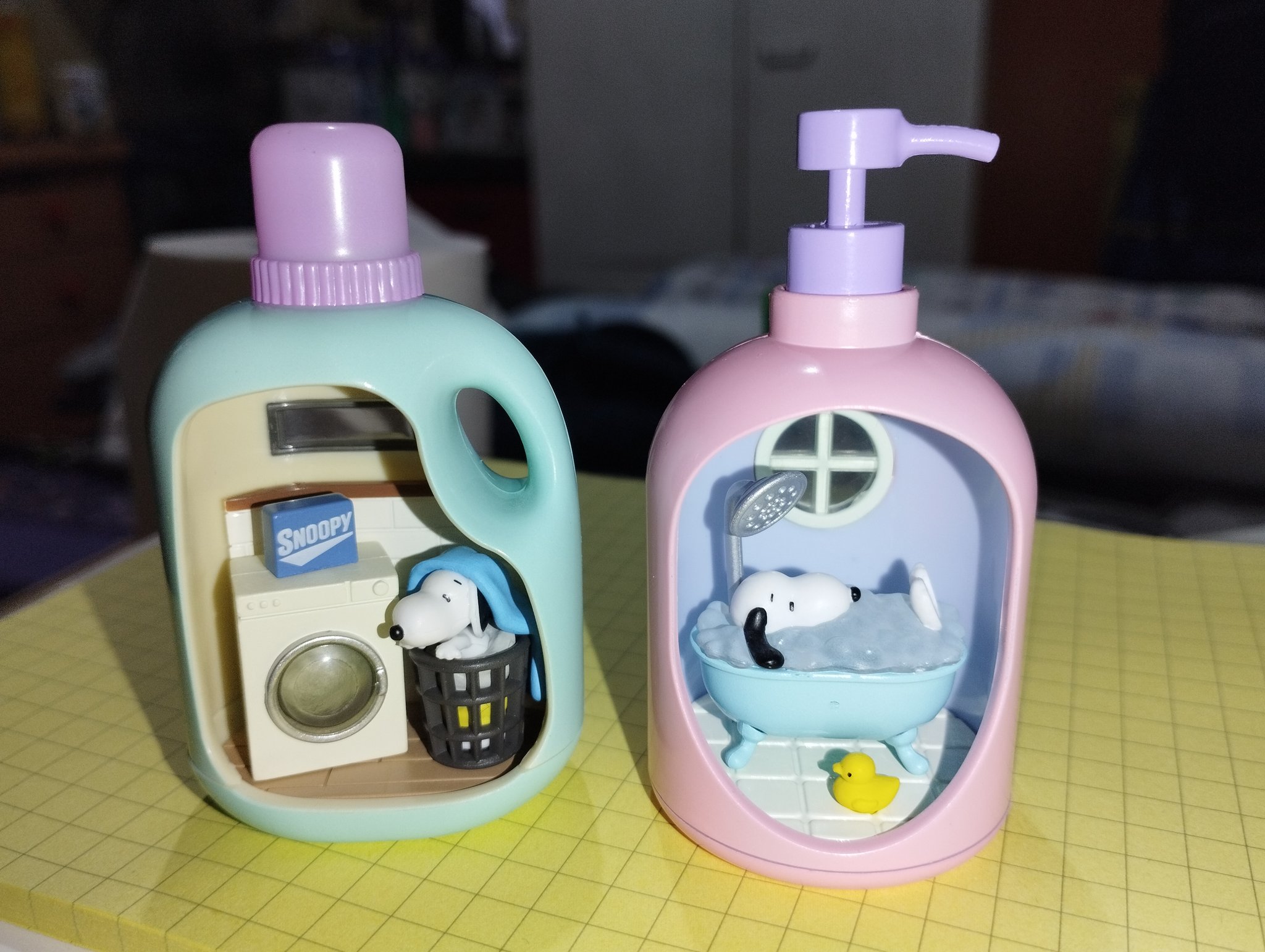
We didn’t have much time in Ximending and it was raining, but I enjoyed getting to see it again anyway and found that I still kind of knew its ins and outs. I got souvenirs for my family and for work and tried to find the magazine shop I used to frequent where I bought copies of Teen Vogue. I thought it had closed down and accepted defeat, choosing instead to check out a shop with manga art all over its exterior—only to find out that it was the magazine shop, now also selling comics and collectibles. (It’s called Mag Freak, which I still love.) I got a fun pouch shaped like a big Nissin Seafood Cup Noodle and a Japanese lifestyle and camping magazine. Before the trip I’d been thinking of overpaying for the Re-Ment Snoopy’s Life in a Bottle series online but decided to try and look for them in Taiwan instead, and by chance I found them at the shop without really actively looking. I bought three blind boxes and got the two I really wanted the most, and the third one I gave to my niece. It all made me so happy.


My mental image of it had been a wide-open storefront with plain displays and shelves showcasing magazines all over, fans situated here and there for cooling. But the Mag Freak of a decade later was now air conditioned and had glass partitions. There weren’t a lot of English titles anymore, and it’s bittersweet that there were no longer enough of them to cover the store pretty much wall to wall, but it was so important to me that this part of Taipei, my Taipei, had remained. 

Apart from everything but the heart in my chest


Another reason this particular tour package was a must for me: my hotel happened to be a five-minute walk from the loft where my aunt used to live. That night after checking in, I left my room to make my way over to the apartment building whose address I’ll always know by heart: Yitong Street, corner Changchun Road.


It was nearing midnight, so the streets were dark and empty. Nothing was open anymore. I crossed the main road with the bus stop in the middle, passing side streets and places I never thought I’d see again: the local playground, the old tea place we loved just downstairs before bubble tea ever became a big deal in Manila, a small market of dry goods that was now a little Korea of sorts. 


The doors to the building were just as I remember. I wondered if the fountain in the lobby still worked, if the security guard we’d come to know as Patrick was still around. If any of the tenants had apple milk bottles in their fridge. 

I didn’t stay out too long. Certainly not enough to feel like I was home again. I wish I could’ve known how it felt during the day with people around and everything in full color, but if there’s anything this trip has taught me, it’s that I can always come back.  

Feel like a lover out on the ocean 


Our first stop the next morning was all about pineapple cakes, with a fun interactive factory tour and a hands-on experience where they had us cover the pineapple filling in dough and shape them with cookie cutters. We made cakes shaped like Taiwan, the classic square shape, and a pineapple. We browsed the souvenir shop while they baked (they had the cutest dessert-inspired characters available as little figures), and they were boxed fresh out of the oven for us to pick up on our way out. I couldn’t resist trying one while it was hot, and it was good enough to make the whole stop worth it, even if it felt a little hokey.

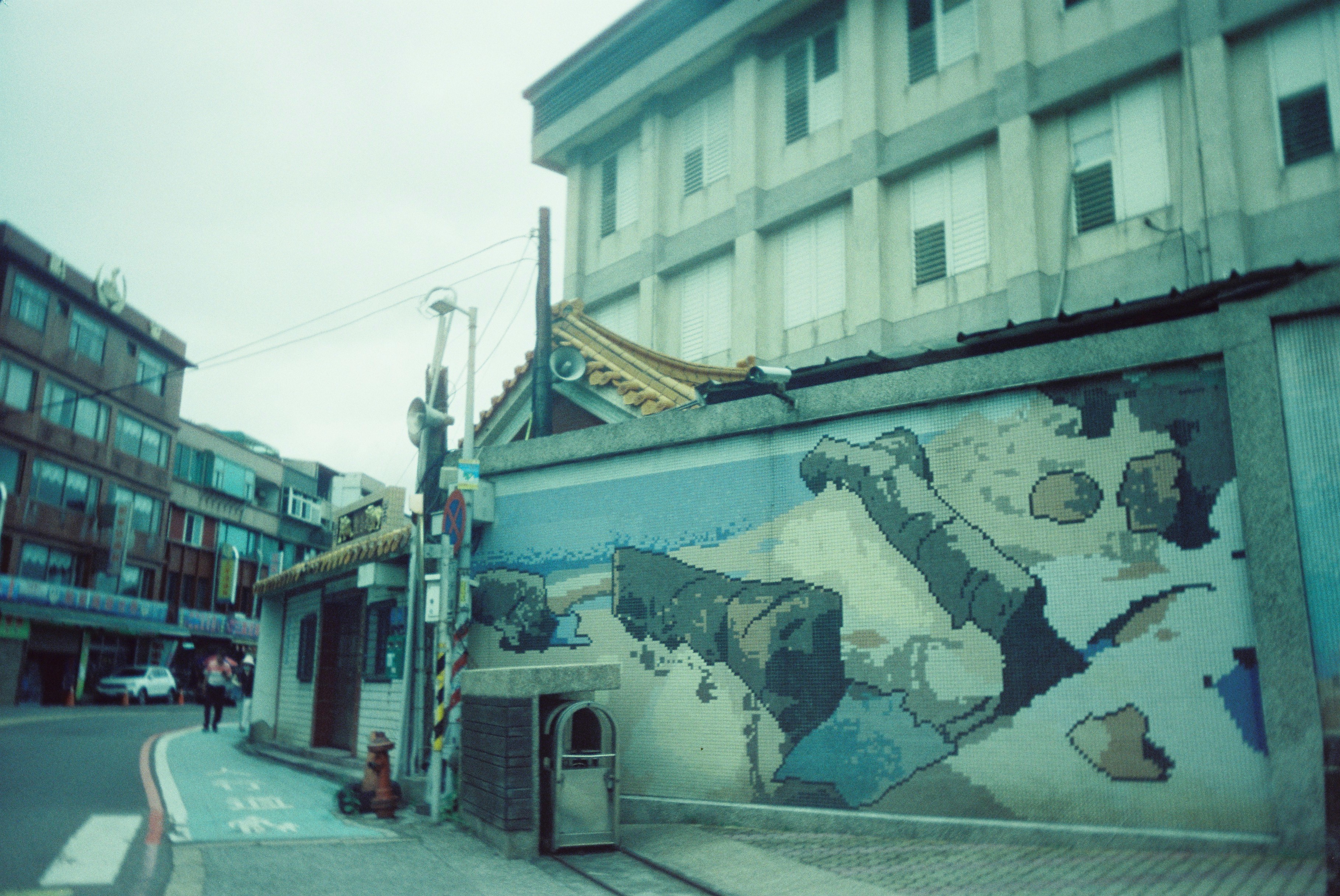
I’ve gotten to see a lot of Taiwan, but I’m glad this trip actually included mostly places I’d never been before. Having ridden mostly trains to get around back then, I noticed how perfectly paved the whole island is for breathtaking road trips thanks to all these long bus drives. Shifen Old Street was charming, if a bit crowded. One of my wishes on the sky lantern didn’t really pan out. Yehliu Geopark was particularly exciting to me, with its gorgeous majestic rock formations set against a body of water that made me feel at peace to breathe in. 

It also happened to be my mom's death anniversary, and getting back on the bus after the sky lanterns, I found that a butterfly had come in, and it kept flapping its wings restlessly by my window. I didn't look away until I couldn't keep track of it anymore.  


We had dinner at Din Tai Fung in Taipei 101. I would joke that I could literally just go to my local mall for it, but it was still nice since I’d never really tried it before. Everything was delicious, of course. There wasn’t time to explore around the area, including the nearby Eslite Bookstore, so after getting back to the hotel I just went on a Family Mart run. I got a cheeseburger onigiri (beef was kind of bland, but still a fun novelty), salted chocolate milk, scallop potato chips (haunts my dreams with how good it was), and some Knorr Soup Deli. 

Soon I would simply evaporate 


That night I barely got any sleep from sudden health problems that didn’t go away through the next day. I begged off the last few stops of the trip, which were thankfully just the well-trodden (by me and my family) Chiang Kai-shek Memorial Hall and the Presidential Square. I just did my best to keep it together on the flight back to Manila, until I saw my dad again at arrivals and we made our way home. 

I had a great time on the trip and I got good pictures and cute souvenirs out of it, but I’d be lying if I said it went exactly as I expected. It made me realize how much of the Taiwan I loved would never have been the same if I hadn’t been there with my family. No mornings sharing cheesy rolled omelettes from downstairs. No long, aimless walks in the early winter/springtime cool that somehow took us farther than we ever imagined. No afternoons cross-legged on the floor waiting for “Bad Romance” to come on Channel V because it had become our song of the season, and no randomly bursting into “Whoa, caught in a bad romance” as we went sightseeing or shopped at Costco or made our way around night markets or dined out. It felt like home to me because I was home. 

But it was nice to get to know Taiwan again in a way I’d never really seen before. It wasn’t as cheap (as in cheap thrills), it didn’t feel as much like my best-kept secret anymore. It’s different, but I know I could fall in love with it again. And the next time around, I’ll make sure to truly discover it for once on my own terms.


“Lost Taipei” by Joanna Wang
“Tourist” by Julian Casablancas
“Sentimental Heart” by She & Him
“Love Me or Leave Me” by Rooney
“Seaside” by The Kooks
“Silver Lining” by Rilo Kiley
“Bad Romance” by Lady Gaga
“Now” by Joanna Wang
“At the First Place” by F4

Friday, June 14, 2024

You could get what you want or you could just get old


Yesterday I wanted a tiny cake. 

Not a bento cake, although I have tried them once or twice. I’m talking about the pre-made three-inch cakes covered in sickly-sweet, powdery frosting from a cake stall you’d often walk right past at the mall. If you can’t quite understand what I’m referring to, I don’t blame you. You wouldn’t know they were even there unless you stopped and really looked, past the Barbies wearing heavy chiffon skirts (I celebrated my seventh birthday with one) and the racecars sporting shiny red fondant paint jobs. They’re usually displayed in a line beneath the glass counter, and people don’t typically peruse specialty cake stores unless they have a reason to. 

My first taste of these treats probably counted as more of a cupcake, years before cupcakes really blew up as a trendy dessert. My mom managed the showroom of a Maco Kuchen in Shangri-La Plaza, and sometimes I would get to visit after school and close up with her, after which we would take the MRT home. On the fifth floor on our way to Shaw Station, we would stop by the Art Cakes stall just before the exit and buy character cakes—deep, dark chocolate batter baked into palm-sized aluminum cups and decorated with the faces of cartoon characters. We’d get Tom and Jerry, or Tweety and Sylvester, or Elmo and Cookie Monster. 

The cakes came with plastic forks, and even after twenty years my sense memory of them is so strong that sometimes it feels like a phantom limb: my teeth scraping against smooth plastic, frosting on my lips, the dense, slightly bitter chocolate cake complementing the saccharine buttercream. 

I don’t remember which came first: my mom leaving her job at the showroom so she and my dad could start their own business, or Art Cakes’ closure. Either way, this routine we had eventually became just another thing we used to do. 

I got to have them again once or twice over the years, delighted at the discovery that the Cakes ‘r’ Us near me had little cakes, too. They no longer came in cups or frosted with animated icons, but they tasted just the way they used to in my childhood memories nonetheless. Most of the time, though, I let myself pass the shop and the cakes by, either too preoccupied with the life I’ve come to live or too shy to come up and just buy one out of the blue. 

The last time I had a tiny cake was five years ago, bought on a whim from a similar type of cake shop in Megamall on a day when everything seemed to be falling apart and I found myself turning to any source of fleeting comfort I could think of. It was a new year and I had just gotten diagnosed with depression and I didn’t want to go home just yet, so I decided, fuck it. I went up to the stall, picked a cake out from the day’s display, and took it down to the food court. It was decorated on the sides in stripes of different colors, the frosting piped downward, the top of the cake a plain pale lavender and framed in dollops of chocolate frosting. No pastels, no patterns, no rainbows, just vivid shades. 

And it tasted the same. Of course it tasted the same. I ate less than half and took the rest home, and I showed it to my mom and we laughed about me being silly and nostalgic and spontaneous. I asked if she wanted any and she said she would have a bite. 

When bento cakes became popular, I adored them for their cuteness and how creative they could be: puffy frosted flowers, faux watercolor, even the chic minimalist ones with short and sweet messages piped neatly onto solid colors. But every time I take a bite, I just end up missing the flavor I know best: like yesterday’s birthday cake, just a tad more bittersweet. In more ways than one.

I can’t remember the last time I passed a cake stall at the mall. There are the fancy bakeshops, sure, only they never have exactly what I’m looking for. In my mind I want to believe I can walk into an SM and find another one. I can even picture the exact places I’d try to look. But I’m pretty sure they’ll no longer be there. Just another thing we used to do, just another thing I took for granted. Just another thing I can’t bring back from the life I was lucky to share with my parents.

(Recently I realized I’ll never have a 13 Going on 30 “Vienna” scene because my parents won’t be there when I turn 30.)

The tiny cakes I grew up with weren’t as sophisticated or pretty as bento cakes. They were kitschy and colorful, piped with standard, impersonal greetings: “Congratulations!” “I love you.” “Happy birthday!” Not much room for personalization. (Literally. They were too small.) But they were cheap and they were still cute and they were good, the perfect last-minute pick-me-up for a celebration with someone dear to you—or for yourself when days felt too ordinary or too gloomy. 

What I’ve learned from them—and my mom who always shared them with me—is that I don’t need a special occasion. There’s always a reason to enjoy the little things.