Showing posts with label pop culture. Show all posts

Tuesday, January 14, 2025

Surrounded by familiar faces, the people that you love to see

 Or: I was born in the right generation


I hadn’t been inside the SM Skydome since I was 18. 

It had been about ten years. It was the venue where I got to cover my first concert with a press pass, where I got to see William Beckett from the front row in the most intimate concert I’ve ever attended—only hundreds in the crowd—and he acknowledged me from the stage. But there’s only ever going to be one band I’ll always associate with the Skydome, and it was the same reason I was there at that moment: The Maine. 

I hadn’t gone to a concert of theirs since their pivotal Pioneer Tour stop in 2012 because their newer songs resonated with me less and it got to a point where I’d become mostly unfamiliar with their setlists. But this was going to be the Sweet Sixteen Tour, to commemorate their debut album Can’t Stop, Won’t Stop, and they were going to play the whole album on their second night in Manila, along with more deep cuts from their discography. 

My friends and I could not miss this. 

Having been fans of The Maine when we were in high school, we’ve naturally had plenty of time to evolve into different people and kind of grow out of that phase. We tend to joke that we’re “retired.” But as soon as the announcement dropped, it was like no time had passed. We immediately made plans, and for some of us, for the first time in a very long time, we were going to be attending another concert in a mall together—seeing the band that allowed our worlds to collide. 

There was no question to me that I would be getting two-day tickets, and closer to the show dates, I decided to treat myself and check in to the hotel connected to the mall so I wouldn’t have to go home only to come back the next day. Most of this might be personal myth at this point. I’d waited too long to write and I didn’t take many notes on my phone, and it was really just two great nights spent listening to the music of my teenage years live with the people I got to grow up with listening to them. 

It’s so freeing to have a band like The Maine that’s pure comfort. I didn’t have any expectations, save for songs I wanted to hear, because I’d already had such a rich history of experiences related to them. I’d seen them in their prime, I’d met them, I’d even gotten to interview them a number of times. Garrett had literally, at one point, used a photo I’d taken of him as his Twitter icon.


On September 27 we mostly watched from the right-side bleachers. They played over 25 songs that night, including “Diet Soda Society,” “Right Girl,” “Don’t Come Down,” “Misery,” and “Blame.” I’d been playfully livid whenever they’d play “Saving Grace” here and I hadn’t come to see them, but this time they played a beautifully romantic mashup of the song with “Whoever She Is” that had us all swaying. Camz and I kept screaming that it’s my song (being a Halloween baby) during “Forever Halloween,” a track I thought I’d never hear live. And “Another Night on Mars” was a great encore. It was funny how we’d go quiet when they’d play newer songs, then go absolutely berserk when it was time for the classics. 

But what got me crying, grasping the magnitude of the how-we-got-here-ness of the moment, was “(Un)Lost” and the back-to-back double whammy of “Love & Drugs” and “Like We Did (Windows Down).” I couldn’t help flashing back to 12 years ago, sitting on the floor outside this same venue with Mariel waiting in the queue to be let in for that concert, as the same two songs—“Like We Did” and “Don’t Give Up on ‘Us’”—looped over and over.  

September 28 was the Can’t Stop, Won’t Stop show, and we decided to plunge into the crowd for it. We all laughed seeing the band come out in the iconic white and gold suits (not black and blue!) they’d all worn as teens in the late 2000s, destined to be in the running for the new princes of pop-punk and eventually become something else altogether. “Everything I Ask For” will always get me on my feet, the ultimate girl-worship anthem where John comes off as a bit of a lovable loser. “Girls Do What They Want” and “Count ‘Em One, Two, Three” will never stop being good old call-and-response fun. “Into Your Arms” is the only song that will ever make me weirdly emotional during a line that tries to bait you into singing, She’s got the most amazing ass

John went into the crowd at one point. I think it may have been to start a mosh pit, or to join one. I’d said to Clarissa the day before that the concert didn’t feel complete without one of her signature condom balloons, and that night she actually delivered. 

I was so excited to sing “Love is a luxury,” she said during “This Is the End.” And the feeling of getting to scream 81! 23! Means everything! To me! during “We All Roll Along” is something indescribable that not everyone will get, but here it’s practically a love language, and few things are as powerful. 

And then there’s “We’ll All Be…” A song that goes on forever, but never long enough. My friends and I held each other tight as we declared, And for the first time, I feel less alone. For the first time, I can call this home. And later, We all have been degraded. We all have been the greatest. 


I had zero regrets about the hotel stay, even if it was a little pricey. I had a good breakfast, piling my plate with annatto rice and creamy chicken and fried dumplings and dry noodles, plus a little chocolate chip scone. And two consecutive days of concerts was a lot, but nothing I couldn’t wash away with a hot shower as soon as I got into my room. 
 
I spent most of both days with Camz, Audrie, and Steph—the three I regularly talk to the most, along with Cheska. But really the whole affair was nothing short of a family reunion: frantic waving and voices going shrill with excitement upon spotting these faces we hadn’t seen in years, some of which we never thought we’d see again. We sang along to lyrics that are probably tattooed on our minds (if not literally tattooed somewhere on our bodies), we laughed about old inside jokes and got up to old habits, we took pictures, we caught up over dinner, we sat down when we needed to because our joints did not work like they used to. “We’re so old!” 

I was especially grateful to have gotten back in touch with Kat and Clarissa, who flew out to live this great big new adventure in America not long after the tour. 

People express doubt all the time these days that you can meet friends online, particularly Tumblr, even more that you could manage to have them cross over to the real world. But as someone whose lifelong friends are from Tumblr, I’m just like, “Skill issue.” 

But of course these friendships are the absolute rarest gems from a bygone era, and I’m constantly being reminded of how lucky we are to get to have something this special. It felt extra real, looking around the Skydome and seeing them, feeling them, hearing them right next to me. These were people I met on a screen because we all loved The Maine a decade ago, and somehow they’ve become inextricable constants within my life. Nobody has ever oomfed harder than we have.

I wouldn’t even really called it a “reunion,” because we’ve all been here for each other all along, like the Skins cast. 


We’re so lucky. We’re so lucky. The timing, the people, the places. We got to be young at a time when these were the bands and these were the songs that were at their peak, living out our exhilaration, living through our angst, and living vicariously through them. Physical media and Astroplus release parties, music video premieres and waiting for surprise screen time on MTV, vinyl pre-orders and waiting two months to listen to the album until the record arrived and you could drop the needle. Microblogging when people weren’t afraid to interact and weren’t too cool to mess up their pages, so we just talked directly on our Dashboards through our posts and reblogs. 

A scene when being part of a scene meant something. You just truly had to be there. 

This kind of thing will never happen again, for us or anyone else. 

It wasn’t just our little corner of the internet—it was also a subculture and pocket of time that allowed us to meet in person frequently and really keep in touch. For a brief time concert producers actually took note that this is what teenagers were listening to, and they managed to bring these obscure-ish bands often enough. Think about it: even There for Tomorrow, even The Downtown Fiction. Many of us were also entering college, and it was just easier to make plans and keep seeing each other and hanging out.   

Live shows at Ayala Malls came to define a generation—our generation. They were common enough that they became unlikely markers of a specific era in my life, of my coming-of-age. Days when Fridays meant going to the mall after school to hang out at Timezone, or see the latest Harry Potter movie (I wish I could make a different reference, but I have to be true to the time), or try new toppings on frozen yogurt. It’s just that sometimes, you just happened to catch Cobra Starship performing their hit “Guilty Pleasure” live and in person at the activity center, and it felt like the most normal thing in the world. 


When the LIV3 Tour was announced to be kicking off for a four-day run in 2011, it caused a huge shift. We could look at how our lives had changed and pin it all on this one crazy week. Our post-concert emotions didn’t cease for six months, as the February show dates bled into high school graduation (for some of us, including me) and the summer and some of the following school year, until we had a new thing to focus on: embarrassing to admit, but it was the All Time Low concert in Araneta that would be taking place that September. And one of the acts for LIV3 was going to be The Maine, whose then-latest album Black and White had pretty much been a soundtrack of my senior year. 

It was pretty clear that while those of us in bandom listened to many acts, the center of our ecosystem and the band that tied us all together was The Maine. If LIV3 was the beginning of everything, Pioneer Tour was where all of it fell into place. Full fucking circle. 

I’m going to hand it over to 17-year-old Fiel from 2012 for a bit: 

You listen to a band for almost five years, and for the first three years you think you’re never going to see them live. You think you’re alone, all this time, listening to them, you think nobody else in your country gives a shit about them. Well, you know there’s got to be somebody else out there, but you don’t know how to find them. You think, “I’d do anything to hear this live.” You think, “Of course, it’s never gonna happen.” 

But somehow, unprecedented and unexpected, this band had ended up here, in my city, in my “hometown,” as pop-punk cliches go. 

You look around, and there are people who feel the exact same way you do, who love this band as much as you do. And you never thought this moment would ever come. 

And you’re there. You’re so lucky to be there. 


This was also around the time Tavi Gevinson launched her online magazine Rookie, which in turn inspired and launched several copycat youth-oriented zines—one of which was our very own Elision, ideated during an idle, random conversation we were having while waiting around for yet another Ayala Malls concert to begin. We were young enough to want to do everything and believe we could make it happen. On my blog I’d post stupid song lyric Picnik edits on pretentious pictures I took with my Nikon D3000, and for some reason they’d get hundreds of notes. As 13- to 16-year-olds we all had businesses selling one-inch wristbands, designing them ourselves and emailing suppliers to produce them for us… and getting detained by mall security for trying to sell them at a Good Charlotte show in Glorietta.

Yes, we literally made (most of) these

Now that I’m 30, I sometimes think about the Tumblr Ask I got when I was 16 that just said, You are so young. It was meant to be condescending, to tell me I didn’t know shit about anything. Of course, I only replied with a GIF of somebody blinking, unimpressed. But that was the best and worst part of growing up online, after all: getting to make mistakes, getting to start over, getting to put something out there and have it travel and reach an incredible amount of people, even if it’s not perfect. 

The whole world was my Tumblr Dashboard, and my Tumblr Dashboard was my whole world.

My online friends and I built our trust and memories as we kept seeing each other, hands held tight and moving our bodies in the dark to the backdrop of all the songs we loved, live. Gathered to share our voices and our elation and this experience that’s bigger than all of us. It went on for a couple of years, every few weeks or months. And it felt only apt to have the culmination of it be the 2013 Fall Out Boy show in Araneta, after they came back from their four-year hiatus. I had turned 19, and I was ready for something else. Everything else.  

I was at prime malleability when I was 16 to 18, waiting to be shaped into a person. I could become anyone. It was that age when the bands you listened to became part of your identity, and in my case, they literally wound up creating domino effects in every facet of my life, for the bad sometimes, but mostly for the good. My friends, my job, how I create and how my passion manifests, how I handle grief and depression. 

We were the ones who were always saying, “I was born in the wrong generation.” But years later, it feels pretty good to realize we couldn’t have been part of a more fitting, more right one all along.

Even if I was “over it all” by 2013 and we all started branching out to other interests, my online friends and I kept in touch, and it wasn’t just because we had our zine or we were still following each other on social media. We’d become IRLs, reaching a level of closeness that allowed us to know each other inside out and love each other—not friends from Tumblr or Twitter, but bona fide friends, period. Tied to each other for life by the blue-moon moments we’d been through, the way nothing else can and nobody else would understand. Organic, true, valid, although I know in my heart it’s always been that way. I had called it a scene, but it was much more than that. It was a community. 

I’ve written this so many times: We came to be in each other’s lives because we loved the same things, and now we love the same things because we’re in each other’s lives.

It’s funny and it warms my heart so much to think about how we used to joke about Ovation Production bringing ‘80s nostalgia acts, and now we were pretty much the ones going to nostalgia-bait concerts. But I’d be doing The Maine a disservice to call them nostalgia fodder, because even now, almost two decades into their career, they’re as experimental and relevant as ever. And even if I’ve moved on, they’ll never stop meaning a lot to me. 

The morning of September 29, I checked out and went home, my wristbands from the two previous nights already buried like confetti somewhere in my bag. It never stopped feeling a little strange, a little empty when the bands were gone and it was all over. “On the ride home I started to get sad,” I’d written in my journal the day after I attended some concert in 2014, ten years ago now. “I always do when [something great] ends and I get preemptively nostalgic.” 

In my room I dug high (the overhead cabinets) and low (the boxes under my bed) for any artifact I could find from when I loved The Maine the most, but I was an idiot and let them all go. I’d sold my signed albums, including the copy of Black and White I’d bought from their merch table at LIV3, when my mom had gotten sick, and the regret kind of stings. But at least I still have my autographs from the whole band—and one from William Beckett—from when I was doing my silly “project” where I collected musicians’ stripper names. This was the kind of crude faux edginess that was acceptable during peak bandom, okay!  


And I’ll always, always have that time after we’d taken our picture for the Pioneer Tour meet-and-greet session, when I was walking off to let the next person have their turn, and I hadn’t even taken a couple of steps when I heard: “Fiel!” 

I’ll let 17-year-old Fiel take this again (even though I can still pretty much recite it verbatim): 

“Yes?” I turned around and faced John, the one who had called me. By my flipping name. I was looking him right in the eye, not even aware of anything or anyone else.

“Fiel, right? How do you spell that?” John asked. “F…?” 

“F-I-E-L,” I said. 

“F-I-E-L,” John repeated with a smile. “Fiel. That’s pretty!”


I still scream into a pillow about it sometimes.  

I may not have had any expectations going in when it came to the Sweet Sixteen Tour, but it was cool to end up in the front row (off to the side, but still) during the second day. And, okay, let me just have this, but I don’t think I’m being delusional when I say that John had looked over and our eyes had met while I was singing along to “I Must Be Dreaming.” 

These photos are so bad but whatever

We locked eyes, and he pointed at me as if he remembered me from all those years ago. The sight line was so clear, and I don’t think it was meant for the rando in front of me. He’d done it before, too, during an event at the Mall of Asia in the latter half of 2012, and if my memory serves me correctly, maybe even at Fairview Terraces in 2015. 

And I honestly wouldn’t put it past him, because I know that’s the kind of sentimental person he is. 

It was so, so wonderful to watch him take the stage again and note that he’d grown up too, right along with us. I’d been a fan of his since he was 19, and he was 21 the first time I saw him live, 23 the last. He was 36 now, married, a father. A girl dad! It was crazy to see how his demeanor had changed. He took himself a bit too seriously in his 20s, like many of us do, weighed down, in his head. I wish I could’ve told him “I get it,” but it’s enough for me to have listened to his music and think, “He gets me.” Now here he was. More confident, more likely to tell dad jokes (so much dad jokes), a certain lightness to him. Like he’d finally seen what was on the other side, and he’d found that everything was going to be just fine. Still every bit the rock star. 

(It's been so strange as well to look back on these bands and realize that so many of them found success online right out of high school. They'd seemed like whole people already, but they weren't that much older than us, and they were also just figuring things out. These people were from small towns, 17 to 20, already living out of tour vans, already total pros, already writing music that will not just resonate but prove to stand the test of time. Again: that just doesn't happen anymore.) 

John at Pioneer Tour Manila in 2012

There was a tweet where a younger person was asking, “Can you imagine being a teenager in 2014? Was it really like this?” And someone had quoted it with something like, “It was great and you weren’t there and you’ll never experience it.” 

And they were being funny, but it made me stop and really reflect on it. The truth is, there’s something enviable about being a teen in every decade. I’ve missed out on so many things, and I’m only getting older, but it made me glad that this, all of it, this is what I got. 

Monday, January 30, 2023

Teen sitcom slasher showdown

Most sitcoms have done a couple of spooky episodes, usually to coincide with Halloween. A god-tier example is “Too Old to Trick or Treat, Too Young to Die” from the third season of That ‘70s Show, which had the cast struggling against Hitchcockian horrors found in Rear Window, Vertigo, The Birds, North by Northwest, and Psycho

Two other favorites of mine are the Boy Meets World season 5 episode “And Then There Was Shawn” and the Wizards of Waverly Place season 1 episode “Movies”—both of which act as affectionate parodies of slasher movies despite neither being Halloween episodes. The actual Boy Meets World Halloween offering was a time travel-themed multi-episode crossover arc with Sabrina the Teenage Witch, and it’s just as delightful. “And Then There Was Shawn,” however, is so iconic that it was even given its own oral history treatment in 2012.

Recently I rewatched both of these episodes and decided to do a little side-by-side comparison just for fun, based on six categories, and really to see how they’re each love letters to the slasher genre in their own way.

Do you like scary movies? 


First off: Why a horror episode? According to the team behind “And Then There Was Shawn” (henceforth referred to as “Shawn”), which aired in 1998, it had a lot to do with the big self-aware teen slasher resurgence of the era—and the fact that, after five seasons, the writers had a good grasp on the characters and the environments they would thrive in. Which, apparently, included a dwindling-party whodunit. And it’s because they know these characters so well that it worked. 


“Movies,” on the other hand, aired in 2007, a time when horror was trying to find its voice again, one experiment being a brief foray into moderately successful Hot Topic-coded slasher remakes that aren’t all that fondly remembered. So it probably wasn’t enough of a cultural phenomenon on its own to drive the creators of a Disney Channel show to make an episode just to capture that zeitgeist; it was more likely that they needed an excuse for Alex and Justin to want to see a restricted movie in a theater, and horror movies were the safest bet. 

Who survives? “Shawn.” Scream penetrating youth-oriented Disney-adjacent cable TV is just a testament to its impact and legacy.

Why can’t I be in a Meg Ryan movie?

Boy Meets World and Wizards of Waverly Place aren’t just sitcoms, they’re sitcoms aimed at younger audiences. It calls for a bigger suspension of disbelief when the plot of the episode involves, well, murder. So how exactly do these kid-friendly characters find themselves in a situation that happens to include a masked killer? 


“Movies” had the Russo siblings learning spell improvisation, also known as make-them-ups. Just like genie wishes, these spells have to be super specific and have no room for ambiguity. It backfires on Alex as she’s trying to get into an R-rated screening: instead of putting herself in the theater, she literally ends up in the movie. 


As for “Shawn,” well… it was all just a dream. And cliche as it may be, it gave the episode the creative freedom it needed: “With the dream structure, our writers were able to get away with murder,” said actor Ryder Strong, who played Shawn. “Literally.” 

Who survives? “Movies.” Shawn’s dream may have been written in to make something creative possible and it makes plenty of sense in terms of a bigger season arc, but “Movies” makes use of a metafictional trope that I just love, joining the likes of The Final Girls and Teen Beach Movie.

What do we have behind door number three?


Every slasher needs a Scream Queen. The guest star of “Shawn” was Jennifer Love Hewitt, best known at the time for Party of Five and being the final girl in I Know What You Did Last Summer, one of the less forgettable follow-ups to Scream. She played Jennifer Love Fefferman, a.k.a. Feffy, a new student who becomes a one-time love interest for Eric. (Apt, since JLH was Will Friedle’s girlfriend at the time.) 


In “Movies,” pop star-turned-horror heroine Ruby Donahue was played by Malese Jow, fresh off three years on Unfabulous playing the BFF of Emma Roberts’ Addie Singer. The script tried to flesh her out by having her complain that the trashy sorority slasher role was her agent’s idea, but more than anything it was a fun little cameo made noteworthy by the actress’s Nick-to-Disney network jump. 

Who survives? “Shawn.” Feffy, we hardly knew ye. Bonus points for the joke where Jack says his favorite scary movie is “the one with the hottie from Party of Five” and Feffy quips, “Neve Campbell?”

Movies make psychos more creative

“Movies” and “Shawn” wholeheartedly embraced and had plenty of fun with the postmodern leanings of Scream, from exaggerated, way-too-long movie titles to the lampshading of ever-present tropes. The film Alex and Justin find themselves stuck in is called Night of the Halloween Sorority Party Disaster 2. Alex asks a perky sorority sister, “ Aren’t you a little too old to be in a sorority?”—an obvious dig at how high-schoolers and co-eds in low-budget slashers have a tendency to be played by 30-year-olds. When the suspense ramps up, Alex observes, “Why did the music get all scary?” Not long after, Ruby remarks, “This is the part where I run screaming into the steam-filled showers, which have been left running for no reason at all.” 


Of course, this is still the Disney Channel, so there’s no body count, and the (non-)killer’s weapon is nothing but a hair dryer. But the logline of NOTHSPD2 (“[an] evil sorority sister [has] come back from the grave to punish us for our reckless destruction of pillows”) and the subtle attention to detail that extends to switching aspect ratios more than make up for it.  


“Shawn” dials up the meta elements in ways that were so much edgier than Boy Meets World ever had a right to be. There’s an actual body count (ten, just like in its reference title And Then There Were None!), jump scares, and red herrings. When the first victim—a character whose first and only appearance took place in this episode—questions why he has to be the one to die, Cory says, “Well, Kenny, it’s certainly not going to be any of us.” There’s even a genuinely creepy song that plays over the school’s sound system. Shawn steps into the role of the resident horror fan who states the rules and tropes and makes commentary. Notably, they discuss the trope of virgins being safe from death, with Shawn muttering that he’ll get as injured as he can without actually dying. 

There’s also a running gag that never fails to make me giggle: 

SHAWN: “The death of the janitor signifies the end of the last of the obvious suspects, just like in the cult classic, The Last of the Obvious Suspects.”

CORY: “The killer is one of us.”
SHAWN: “Like in The Killer is One of Us.” 

ERIC: “Killer, killer, you’re the killer, and I know you’re going to tell me you’re not the killer, and because you’re beautiful you think I’m going to believe you but I’m not! It’s just like that movie, Killer, Killer, You’re the Killer, and I Know You’re Going to Tell Me—

Who survives? “Shawn” would make Randy Meeks absolutely proud.

They sell this costume in every five and dime in the state


Both of the killers’ costumes are—surprise, surprise—based off of Ghostface from the Scream franchise. The version in “Shawn” trades the elongated ghoulish face of agony in for a generic skull, making it look like the Grim Reaper. “Movies” has the killer don a translucent mask similar to the ones in Jawbreaker, giving its would-be victims a glimpse of its eyes and the pink of its lips pulled into a slasher smile, albeit in a blurry, flat, doll-like uncanny valley way not unlike in Alice, Sweet Alice

Who survives? “Movies.” Because I love Jawbreaker, and because the mask did make the killer look creepy despite its silly weapon.

Like the plot of some scary movie


Neither of these slasher episodes can be considered “throwaway” when it comes to the overall progression of either show’s story. On Wizards, “Movies” provided an opportunity for character development and coming of age—it brought the siblings closer and taught them not to be in a rush to grow up. Being the ninth episode of the series as a whole, though, it’s still a little too early to make any real changes, so its effect is quite surface level. 


“Shawn” is the culmination of the title character’s feelings regarding the events of BMW season 5, which centered heavily on Cory and Topanga’s breakup. Aside from being a fully realized story with twists and reveals, the episode actually moved the overarching plot along, affecting character relationships and giving the audience insight into Shawn’s headspace (i.e. his guilt and anxieties) as his best friends go through this rough patch.

Who’s the Final Girl? “And Then There Was Shawn” nabs the honor with four out of six points, and for a lot of the categories, it’s not even close. There’s a reason people still talk about this episode all the time not just as a best for Boy Meets World, but as a cultural shift for television, period.

Saturday, May 16, 2020

Self-isolation in the movies

 
Lauren Ashley Carter in Darling (2015)

Our days in quarantine have been compared to post-apocalyptic dystopia and endless time loops — but how do movies actually depict what it’s like when you’re physically disconnected from the rest of the world?  

One of the movies I have watched under lockdown is Vivarium, which is science fiction horror featuring Imogen Poots and Jesse Eisenberg. It was two weeks into the community quarantine, and I felt shaken as I watched the main characters — a couple looking to buy their first home — try to find their way out of the never-ending suburbia in which they had found themselves trapped.

The houses, all the same pallid shade of green, were ordinary-looking, stood next to each other in neat rows that seemed to go on forever into a sun that seemed more artificial than anything. No matter which way the characters drove or walked, they ended up right back outside the house that’s been chosen for them. It was deadly silent, the air stale, and there was nobody else around. There was no escape, nowhere else to go.

It was chilling, and it was too close to home. Literally.

I didn’t know it at the time, but the movie would end up embodying the uncertainties of the future that lay ahead of not just me personally, but the planet as a whole. You do what you can to survive, and you do what you can to alleviate your own nervousness, to rekindle your sense of purpose and direction, even if it means digging a hole into the earth just to find where it leads.

Vivarium (2020)
In the weeks since, it has left me curious about what other movies have to say about self-isolation and disconnect. I looked back on what I’ve watched and emerged with a list that has its fair share of collective similarities and differences. There’s a whole range of genres and stories, from the lighthearted to the mindscrew-y. Quarantine movies, after all, have never had a reason to exist before today — a gaping hole in cinema that I have no doubt will soon be filled.

The first movie that came to mind when I started thinking about this running theme was Two Night Stand, a romantic comedy starring Miles Teller and Analeigh Tipton. A pair of virtual strangers who have a one night stand end up not being able to stand each other come the morning after — only they’ll have to put up or shut up, because there’s a blizzard and now they’re stuck with each other for the time being. The movie has plenty of the recklessness that comes with being removed from routine or the status quo, and its depiction of people trying to get along under close quarters rings especially true these days.

In Weepah Way for Now, the fictional sisters played by real-life siblings Aly and AJ Michalka aren’t necessarily stuck at home. It revolves around the pair as they plan a going-away party in their house, and each scene is conversational and very slice-of-life. It resonated with me and felt very relevant to current events anyway; there was the bickering and adjusting that came with cohabitation, there was reminiscence and nostalgia for days gone by, there was purposeful movement coinciding with flights of fancy. The sisters cling to favorite places and the objects that have made up their lives. Their comfort and their grief come hand in hand and they live through the endings, the changes, and the bad news because they have each other.

Evan Rachel Wood and Ellen Page in Into the Forest (2015)
Into the Forest also features a pair of sisters, Nell (Ellen Page) and Eva (Evan Rachel Wood). Set in the near future, its plot is set into motion when a power outage and technological collapse occur nationwide, causing an apocalypse. With their father dead, the girls board themselves up in their remotely located home, surrounded by the forest and, beyond it, the still turning world. Food and supplies run scarce while fear and danger run high, but as in Weepah Way for Now, they still have a semblance of hope and protection in each other’s presence.

Two interesting studies of madness in isolation are Darling and Queen of Earth. The former is about a young woman who slowly loses her grip on reality when she takes on a job as caretaker of a New York apartment with a vague but morbid history. The movie is told in chapters that come off more like non-sequiturs instead of telling a linear narrative, serving only to better illustrate the descent into madness of the unnamed lead, who spends most of her time alone. Being shot in black and white with an absence of modern objects gives it the feel of being lost in time — a stylistic choice that heightens the anxiety and horror, especially set against the backdrop of a grand but empty home.

Queen of Earth, on the other hand, is a psychological thriller with a brilliant performance from Elisabeth Moss, in which two friends spend a weekend at a cabin in the woods and realize they’ve drifted apart. Moss’ character Catherine, in particular, already spiraling from a breakup and the death of her father, undergoes emotional distress that breaks down her sense of self: “I don’t really feel like I exist anymore.” There’s biting tension and hostility, the plot unfolding to ominous music that makes the viewer wonder where it’s going, or if it’s even getting anywhere — in his review, film critic Brian Tallerico describes it as “those hazy, uncertain days of our lives when our definitions of ourselves have to change.”

Elisabeth Moss in Queen of Earth (2015)
Finally, there’s 10 Cloverfield Lane. Mary Elizabeth Winstead plays Michelle, who after a car accident wakes up in an underground shelter after being “taken in” (read: kidnapped) by Howard (John Goodman), who appears affable but soon reveals himself to be quite unhinged. He claims that the world is in shambles and she’ll never be able to survive out there. Together with the third inhabitant Emmett (John Gallagher Jr., a delight), they quickly fall into a new day-to-day — but Michelle will stop at nothing to find out what’s really going on with the bunker and the world outside.

Beyond its otherworldly themes, what struck me most about the film is how it portrays a person’s sense of safety, and how the characters find ways to fill their days. When you’ve gotten used to a strange situation and begin to feel secure in it, it’s easy to forget that there could be very real threats outside, the way many of us tend to do in the midst of this pandemic.

Time moves differently when you’ve shut yourself away from the rest of the world. The movies I’ve seen over the last few weeks in order to write this essay sometimes take place over a few days, or weeks, or months — it’s interesting to me how they depict the passage of time, especially when characters have to remain in one place through it all. Hair grows, or the weather changes, or there’s a sudden dance montage. Being stuck in a certain space for that long, you’re forced to confront your own notions of ennui and amusement. Your resourcefulness and creativity are put to the test. The movies address that, too: characters doing their nails, bringing out VHS tapes and old board games, filling the silence with conversation.

AJ and Aly Michalka in Weepah Way for Now (2015)
Just beneath it all remains the paranoia and anxieties we’re trying to see through to the other side, always thrumming — along with the sides of ourselves we’d rather not face. I like that these movies have a wide variety of tone and mood; it shows that these thoughts that haunt us can lead to enlightenment and promise just as much as madness and despair.

But the part I keep holding on to is that most of these characters are never truly alone, no matter how dire their situations become. I find myself going back to that scene in Weepah Way for Now where, after the sisters face an unimaginable tragedy, the narrator refuses to dwell on the pain that follows: “We can choose to focus on other things if we want to.” It’s impossible to do that in real life — and it would be foolish and uncouth. But I like the idea of it anyway, that there will be an after that comes at the end of hard times.

The story skips ahead, instead, to the first time the sisters have a good laugh after what they’ve experienced. They’re overlooking the city they’ve grown up in; their movements are stilted and tentative at first, but they begin to smile in earnest and goof off, their limbs growing looser and bolder. They feel good, they’re surviving, they’re fearless, they’re loved. Together.

Sunday, April 26, 2020

Tomorrow will be different, so I’ll pretend I’m leavin’

Photo by Colin Lane

My undergraduate thesis was a stylistic analysis of The Strokes frontman Julian Casablancas’ lyrics supported by a corpus linguistic study centered on the word “wait.” This meant building a corpus — also known as a collection of words — out of his songs including his work outside the Strokes, tracking how frequently “wait” appeared in them, and breaking down the meaning of each track through a stylistic theory to find the relevance of the word to the songwriter, and to determine why he used it so much.

I’ll spare you the details; the important thing here was that when I uploaded Julian’s lyrics to the corpus analysis software, I was able to determine that “wait” was, indeed, the word that occurred most frequently in his songwriting. (Minus the more common pronouns and articles, of course.)

And the point here is: waiting is kind of a recurring theme when it comes to the Strokes. Even when you’re a listener. Especially when you’re a listener.

Their sixth album came out this month, released four years after their Future Present Past EP, seven years after their previous album Comedown Machine, and almost 19 years after their groundbreaking debut Is This It. That’s a lot of time. That’s a lot of waiting. It began to seem almost mythical, like it would never actually happen. Wouldn’t it have been just like the Strokes to have their final track be a half-somber, half-mumbled ballad titled “Call It Fate, Call It Karma,” after a line from Ghostbusters?

But they continue to beat the odds. The nine-track album is called The New Abnormal, and in its greater moments, it showcases the best of the Strokes together and apart. Since they adopted a more collaborative (if initially volatile) songwriting process on Angles, certain Strokes tracks have been easier to pinpoint as the work of a certain member, from guitarist Albert Hammond, Jr.’s frenetic and unpredictable energy to drummer Fabrizio Moretti’s loopy but sophisticated deviations. It’s nostalgic but in the moment, familiar but something nobody else could have done.

Single “Bad Decisions,” in particular, is practically a mashup of the Modern English classic “I Melt with You” and Billy Idol’s “Dancing with Myself” — a perfect example to cite when mentioning the album’s laconic description, which is basically this: It wouldn’t be out of place on the soundtrack of Disney’s 2005 teen-hero film Sky High, and it kind of works.

You can’t say it for sure, but you can guess that the Strokes actually had fun with the creative process; it’s not just something to do for a paycheck. There are “New York City Cops”-style ad libs between the members left on multiple tracks. For a band that’s known for unaffected Manhattanite cool, it’s refreshing to see that the Strokes care. They care so much that part of the album’s promotions included performing at a Bernie Sanders rally. The guitars are intricately tangled as ever, complementing ‘80s synths and falsetto — but there are also instances of crystal clear vocals recalling First Impressions of Earth, to match the equally unfiltered lyrics. They border on confessional, which is something new for a band that’s preferred to keep it vague and esoteric.

Another thing that sounds just like The Strokes? The fact that after everything, they happen to have dropped their long-anticipated album in the middle of a global pandemic that has drastically changed how we live. They’ve always been stuck with generational labels and expectations pinning them to the zeitgeist, their work and existence always seeming to signal the beginning or end of something. And with such an aptly titled album, they might have just done that again.

The songs were written pre-quarantine, but some of the lyrics can’t help but hit hard: “I just wait for this to go into circles,” Julian sings in “Brooklyn Bridge to Chorus.” “And the distance from my room, is anything so necessary?”

At six minutes and 15 seconds long, “Endless Summer” is the longest track on an album that averages five minutes per song. Having been raised on new wave karaoke sessions, I instantly recognized its sampling of The Psychedelic Furs’ “The Ghost in You” in the chorus as Julian croons, “Summer is coming, it’s here to stay.” The familiar melody elicits a feeling of deja vu, adding weight to its overall effect of dissonance — the song sounds bright and full of possibility, but it’s actually more about feelings of ennui, of the pitfalls of boundlessness. This boundlessness is inescapable. You want it to be over.

Last I heard, only two members remain in the city that they arguably define as much as it defines them. Final track “Ode to the Mets,” which is just under six minutes long, cements the fact that you can take a Stroke out of New York, but you can’t take the New York out of the Stroke. It’s a fitting outro, and also a little too close for comfort in these times: “Gone now are the old times, forgotten, time to hold on the railing,” the lyrics go. “So pardon the silence that you’re hearing. It’s turning into a deafening, painful, shameful roar.”

When I was working on my thesis, my adviser told me to study the sociocultural background of each album I was analyzing, i.e. what was going on in the world at the time of its release? I didn’t understand the significance of it at first — the state of the world in the aughts felt like too broad a topic to include — but it ended up helping me make sense of a lot of the lyrics with the added context. And it’s helping me make sense of this album, at least in relation to what we’re experiencing right now.

There’s always been something vaguely apocalyptic in certain Strokes songs, like “Ize of the World” (young adults to modernize / citizens to terrorize / generations to desensitize … cities to vaporize) and “The End Has No End” (one by one, ticking time bombs won / it’s not the secrets of the government that’s keeping you dumb). They welcomed the new millennium with Is This It, and now they’re welcoming a new decade. Their music has seen their generation — and the ones that have followed — through war, and disaster, and collapse, and now this pandemic. Their Gen X nonchalance has grown the heart and spine needed for political dissent.

When I first heard that they’re calling their album The New Abnormal, it sounded contrived, commonplace. Old. But now it’s almost prophetic, in a tongue-in-cheek kind of way, of course.

I’d been wondering whether the so-called tradition of “wait” in Julian’s lyrics would continue with this new era. And when lead single “At the Door” was released, there it was: “Anyone home? Have I lost it all?” he sings. “Lying on the cold floor, I’ll be waiting. I’ll be waiting from the other side, waiting for the tide to rise.” Another few instances to add to my corpus. A continuation of a cycle I’ve never minded.

Listening to this album, in the house I haven’t left in over a month, I turn pensive, restless. It goes too well with the aimlessness I feel as the days blur together, slow and everlasting. But somewhere in there, there’s also purpose, drive, and just the tiniest bit of spite: we will make it past this, by sheer force of obstinacy at the very least. What’s “Ode to the Mets” about, anyway, if not rooting for the underdog?

As always, as ever, we wait.

Saturday, March 28, 2020

There's part of you that can't help but to see right through this part of me


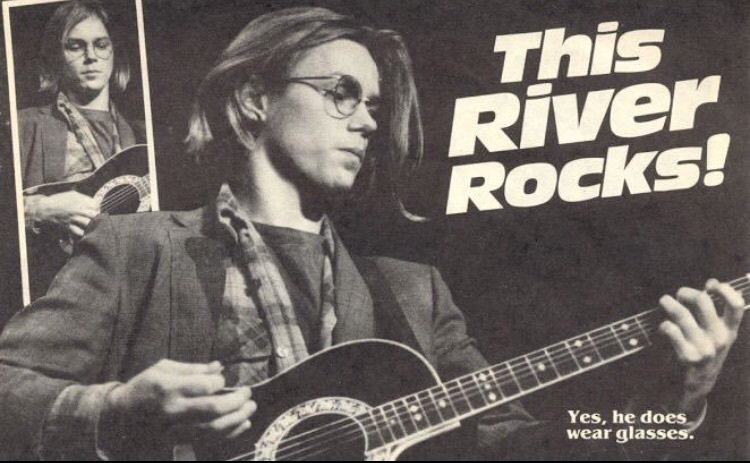
River Phoenix is on Spotify.

I remember searching his name on the music streaming platform a few years back, curious to see if anybody’s ever written a song with his name in the title. There were a handful, but none by artists I’d heard of. The first result, though, was an artist page with only one track called “Curi Curi,” a minute and fifteen seconds long. I didn’t know what to expect until about halfway, when the late actor’s voice suddenly began reciting a spoken word piece. I felt a jolt; I didn’t expect it to actually be him.

The track was a collaboration with Brazilian singer-songwriter Milton Nascimento, whom I would learn had been a good friend of his. I didn’t save it to my library, but I would listen to it sometimes, when I wanted to hear his voice or when I was missing him. Which was a foolish thought, wasn’t it? He died exactly a year before I was born, on the Halloween of 1993. We never walked an earth where the other existed.

I was ten years old when my mom pointed to the television and said, as though greeting an old friend, “Oh, that boy is dead.” Stand By Me was on and I looked past her outstretched arm to watch the kid with his sleeves rolled up and a cigarette in his mouth, his eyes vulnerable but also world-weary. I couldn’t comprehend that he was right there, and yet he was also gone.

I would see him again years later, in The Thing Called Love, one of his last films. He was all grown up. He played guitar and sang softly, somberly. He was tall and brooding, hair dyed darker, but his eyes were vulnerable and world-weary all the same. He was beautiful. “He’s dead,” my mom reminded me, sounding slightly sadder this time.

I developed a crush that never went away.

The summer I was fifteen was a long one, the days stretching and bleeding into one another. I never had anywhere to be or anything to do but stay inside and read young-adult novels or watch Tumblr-acceptable indie movies like Nowhere Boy and Adventureland. It occurred to me that I hadn’t seen River Phoenix in anything other than the two movies I’d already watched, so I spent the rest of that summer exhausting his brief but prolific filmography.

His characters had the most wonderful names: Chris Chambers, Mike Waters, Eddie Birdlace, Devo Nod. A Night in the Life of Jimmy Reardon was terrible and cringe-inducing until the final few minutes, when it suddenly grew a heart and became more poignant and nostalgic than anything. More fitting of its original title — Aren’t You Even Gonna Kiss Me Goodbye? — which still pinches at my chest sometimes. Dogfight was a fumbling romance with Lili Taylor, both square in its earnestness and inexplicably chic. Running on Empty was the movie that earned him an Oscar nomination at age eighteen, and the movie I still cry to all the time, ten years later.

I learned, not long after, that he had a band called Aleka’s Attic. His songs were in the first person, his lyrics raw and capricious but clear and honest in his singing. He sounds young, but also like he has outlived everybody else. There were low-quality recordings of their songs straying across the internet — some of them from tapes the band made and sold themselves, some of them released through benefit albums for animal rights — which quickly became an on-again, off-again soundtrack to my own youth.

I saw a band manager, once, at a concert I had attended, who looked so much like a ghost of him — right down to the sandy blond hair that reached just past his shoulders — that I had to stop and catch my breath. But none of my friends knew who River Phoenix was. My crush on him, which had grown to include more complicated feelings like grief and disquiet, was something that was evidently mine and mine alone. Almost like he had been an imaginary friend I’d made up; something personal that I was keeping for my own.

That’s not exactly true anymore. I’ve noticed in the passing years that he’s become part of the internet boyfriend canon, put in the same category as, say, Leonardo DiCaprio in Baz Luhrmann’s Romeo + Juliet or, worse yet, Johnny Depp when he was dating Winona Ryder. Like either could ever live up to him. (Like Leo would have ever had the same career he’s had if River’s spot had never been vacated.) 

He was bigger than me, I realized. He had been a teen heartthrob, after all, his face plastered on the pages of BOP and Tiger Beat. I wasn’t even the first or the last person who’s put him on this impossible pedestal, who’s listened to his songs and thought she understood him, who’s held on to him as a tragic and dreamy figure. There were many of us who longed for him on the widow’s walks of our minds.

When I turned twenty-four, one of my first thoughts was that I would be older than him forever.

When I got a Spotify account, my iTunes library was left on my hard drive, abandoned and all but forgotten — the Aleka’s Attic songs included. It wasn’t until earlier this year, when Joaquin Phoenix had mentioned his brother during his Oscars speech (he and River were the only boys out of a brood of five) that I remembered they existed and wanted so suddenly and so badly to hear them again.

I typed the band’s name into the Spotify search bar, thinking I’d probably get nothing. But then there it was, an official artist page listing three of the songs I’d known and grown up with. Rain Phoenix, River’s bandmate and sister, had finally let them see the light of day after the band’s activities were cut short following her brother’s death.

River Phoenix is on Spotify, for real this time.

There was “Where I’d Gone,” a day-in-the-life kind of song that grew more unhinged as it progressed. There was “Scales & Fishnails,” a brief and dreamlike interlude I’d once imagined playing at my wedding someday. And there was my favorite of all, I couldn’t believe it was there, “In the Corner Dunce” — which River had written and recorded when he was eighteen and feels like the most authentic piece of himself he’d ever left behind, singing like it hurts and like it matters: I rarely get to feel, you know, I hardly ever feel in place.

I’ve read that Rain Phoenix hopes to continue releasing the rest of the tracks, completing the album that was once meant to be called Never Odd or Even. I hope it includes another favorite, “Note to a Friend.” A lone guitar chord, and then River sings: My days are heavy on the inside of my night. Rain joins in, and together they sing of better days about to come. The verse repeats, and so does the refrain. Once, and then again: Better they come, better days come.

He’s been gone so long. And yet he lives on years and years later through this small thing — an official release, the kind his band never got to have, on something so modern and so now, anachronistic in the best way.

So strange, and yet so welcome. Like that summer all over again, having him come alive once more like it was for me and me alone — only this time, I know I’m not alone, and I can’t wait to share it with anyone who’s willing to listen. This is River Phoenix, I would tell them. You can’t find many traces of him anymore, but he’s right here.

Monday, March 9, 2020

Something to die for


For the generation who grew up with Final Destination, the supernatural slasher franchise would end up embodying the anxieties and ennui of our adult years.

The last Final Destination movie came out nine years ago, so it was a bit of a surprise when the franchise trended on Twitter in the Philippines  recently. It wasn’t news of a new installment or a reboot however — there was just a game prompting users to share the movie that traumatized them the most, and Final Destination was the most common answer.

Even someone like me, who has become so desensitized to horror that I was able to shrug off Hereditary as soon as the credits rolled, could understand why. Who wouldn’t be traumatized by movies about people who cheat death and then are stalked by its vengeful supernatural form, meeting their ends in gruesome Rube Goldberg-esque accidents like burning in a tanning bed and strangulation via laundry line?

I could argue that Final Destination was actually my gateway to horror, beginning with a morbid fascination that soon became honest appreciation. My first glimpse of it was a scene from the second movie as it was airing on TV — a woman’s braid gets caught in the elevator doors, and she literally loses her head in the process. The whole thing was tense and drawn-out, but I couldn’t take my eyes off the screen. I was terrified.

When we talk about these movies, though, almost everyone agrees that Final Destination 3 is the icon of the series. Despite being released in the winter of 2006, it was a perfect summer movie, taking its bright colors from its initial setting of an amusement park, where a malfunctioning rollercoaster results in the deaths of a few high school seniors.The focus this time is solely on a group of teenagers who managed to get off the ride and narrowly escape their dark fate — before realizing that it, of course, has begun following them around. (Set to The Vogues’ “Turn Around, Look at Me” for added creepiness, and also added rock ‘n’ roll cool.)

Turns out, there’s a whole generation of 20-somethings who now walk around still carrying the fear instilled in them by this movie. Maybe they saw it in theaters, maybe it was shown to them by a friend. It was certainly a favorite for cable television reruns. Either way, a certain group of people seem to have grown up defined by Final Destination just as much as they are by Mean Girls or even Harry Potter

Again, horror barely ever affects me anymore. But I still remember the first time I stumbled on Final Destination 3 while looking for something to watch on cable when I was 13. I’d lie awake that night tossing and turning, replaying the tanning bed scene over and over in my head. Or the scene where a car’s engine fan obliterates some poor guy’s head. Or even just “Turn Around, Look at Me” giving me the worst kind of last song syndrome.

I swore up and down I would never watch it again, but somehow I did keep tuning in whenever it was on. And over time the debilitating fear I felt at the mere thought of it became something more like comfort — especially after I knew that my friends had seen it too, and they were also scarred by it the way I was. It became a bonding thing for us; we talked about the parts that scared us until we could laugh them off, and by the time The Final Destination came out, we had moved on to heckling the characters and making fun of their cartoonish demise. When Final Destination 5 turned out to be a stealth prequel to the first movie, we could even recognize it as a one-of-a-kind cinematic experience. (Or maybe that’s just me.)

These days I find that my relationship with horror has changed again. When I was in university it was a way to reduce stress; mindless entertainment with reliable patterns that might still form together to create twists and turns that could shock me and make me question reality. Now I suppose it’s a little more cerebral, a little more critical — something to help with the anger and powerlessness I feel about a world that refuses to make sense, something to take the edge off when my mind feels a little too full and a little too empty all at once.

I read an essay from Nick Antosca, creator of the horror series Channel Zero, about “creating horror in the era of Trump.” They had been filming an episode of the second season No-End House during the 2016 US elections, and he wrote, “When I watch that scene now, I can barely separate the sinking feeling we had that night with the sense of dread that lives within the show itself. The horror genre has always been a place where Americans go for cultural catharsis, but never in my generation has the day-to-day American experience felt so consistently like a horror movie.”

I realized this week that the trauma left behind by Final Destination goes beyond irrational fears of tanning beds and LASIK surgery. Somehow its nihilism and haunting imagery now reflect the modern anxieties and fatalistic coping mechanisms my generation came to embrace. Make it make sense, we’d recite, maybe even with a “weary face” emoji for emphasis. Because these days, it does feel a lot like everything in the world is out to get you — but if there’s anything I’ve learned from these movies, it’s that even if the worst to come is inevitable, it doesn’t mean there’s nothing you can do to fight back and live another day. 

Thursday, January 9, 2020

Class rage goes to the movies


From Knives Out to Parasite, the past year’s most talked-about cinema explores every intricacy of the gap between rich and poor and, in some instances, turns it on its head.

It’s been quite a year for Bong Joon-ho’s Palme d’Or-winning Parasite. It has garnered a Screen Actors Guild Award nomination for Best Ensemble Cast, and recently won a Golden Globe for Best Foreign Language Film.

It has been the first South Korean feature to reach such heights, connecting with worldwide viewers on a scale that’s unmatched and unprecedented. In his acceptance speech, the director posited that if more people were willing to watch movies in languages they can’t understand and put a little more effort into reading subtitles, they would open themselves up to amazing storytelling and filmmaking. Parasite, for its part, has certainly earned all the accolades. There’s a complexity and a twist to it that makes it hard to describe and a joy to watch when you go in not knowing anything about it, but it’s also plain in its stark depiction of class dynamics — which could be what makes it so resonant, even to “very local” (Bong’s words) Western sensibilities.

Interestingly, the line that divides the well-to-do and the rest of us who struggle financially has also been explored in other favorite movies from the past year, unveiling a possible pattern in what makes today’s audiences tick. This discussion was arguably brought to the table and anchored by Rian Johnson’s Knives Out, released last November and another awards season frontrunner.

The whodunit opens, like murder mysteries are wont to do, with a body: bestselling mystery author Harlan Thrombey’s (Christopher Plummer) throat has been slit in his gothic mansion. Initial investigation reveals he did it himself, but it’s hardly case closed. With his fortune and property up in the air, Harlan’s surviving family reveal themselves to be despicable and unpleasant in several different ways — daughter Linda (Jamie Lee Curtis), for instance, built her own business “from the ground up,” conveniently leaving out the hefty loan from her father, son Walt (Michael Shannon) refuses to give up control of the family’s publishing house and has raised a teenage neo-Nazi, and grandson Ransom (Chris Evans) is spoiled and jobless.

When the Thrombeys — who have been swimming in privilege and privilege-blindness — find themselves threatened with the possibility of losing their wealth, they prove themselves each willing to do whatever it takes to protect their own interests. Caught in the middle is Marta (Ana de Armas), Harlan’s nurse and friend, who is an immigrant and not exactly living in comfort. What she does have, however, is a pure heart, integrity, and fearlessness when it comes to standing up for what’s right.

Similarly, there’s bold and brash horror-comedy Ready or Not, in which Grace (Samara Weaving) marries into the Le Domas family, whose wealth comes from their board game empire. On the night of her wedding, she has to play a game with them as an initiation of sorts and ends up drawing Hide and Seek, which apparently now means they have to hunt her and kill her in ritual sacrifice to the Devil. But Grace is not so willing to die just for them to carry on with their elitism and their affluence, so she fights back and bursts their bubble (and maybe their insides) in the process.

Both Knives Out and Ready or Not depict the rich as the clear antagonist; the chaotic evil to Marta’s lawful good and Grace’s chaotic good. They’re both disruptive and subversive to a system that favors the upper class, and while this makes them far-fetched, it’s no less fun to watch some rich snobs get their comeuppance.

Mikhail Red’s Dead Kids, which premiered on Netflix in December, takes a more realistic approach. A group of misfits carry out a plan to kidnap the biggest jerk in school, motivated by revenge and the cool P30 million they’ll be receiving as ransom. The least well-off is Sta. Maria (Kelvin Miranda), who struggles to pay rent and couldn’t get a scholarship to the expensive university of his dreams. When they discuss what to do with the money, his co-conspirators talk about cars, and he only wants to get away from the big city and return to the province.

The movie comments on the drug war and how unfair society is and uses status symbols like Yeezys and AirPods to illustrate class differences, but perhaps lacks the tension and doesn’t simmer enough in the consequence for either the would-be kidnappers, the self-absorbed victim, or the corrupt cops to leave an impression or get a message across.

Parasite itself was criticized for its “failed revolution,” as the Kim family’s ruse of monopolizing the Park family’s payroll through taking different jobs without the latter knowing they’re related to each other — a scheme that would have made their lives infinitely more comfortable, if only it were sustainable — did not lead them to the pot of gold at the end of the rainbow, after all. But it’s a criticism that doesn’t really have merit when you consider how the turn(s) of events flow into one another and toward an ending that’s not only justified and believable, but also equal parts hopeful and wistful. It highlights that “work hard for a better life” is bullshit, and for the lower class, there’s always, always more to lose.

The main difference is that the Parks aren’t cruel. Kim Ki-taek (Song Kang-ho) observes that they’re actually quite nice despite their wealth, and his wife Chung-sook (Chang Hyae-jin) is quick to interject that they’re nice because they’re rich, because they can afford to be. What the Parks are, instead, is stuck-up and blissfully ignorant, and this cultivates a resentment in the Kim family that festers and boils over as the action continues to rise — which is the most radical, true-to-life part of all.

Filipinos are used to narratives that lay out the class hierarchy for us, but it’s mostly on teleseryes and in movies that depict being rich as something aspirational. But with billionaires amassing collective net worths higher than those of the rest of the world combined, more and more people have become uncomfortable with the mere idea of wealth, even for themselves.

Cinema has always reflected the times, and these days, people are driven by their anger against and frustration with a system that puts certain races, genders, and classes first and leaves them powerless. It’s refreshing and thrilling to see that filmmakers are pushing back on the status quo, and that the general public is actually here to listen. In telling, hearing, and sharing these stories, we can find ways to revolt and lay the groundwork for change — or at least see what change could be.

Tuesday, November 8, 2016

viewer discretion is (not) advised


I found out about Alejandro Amenábar’s 1996 feature debut Thesis on the same list of 1990s horror movies that led me to Perfect Blue. I have to say, the person who wrote that best-of list just gets me—or, more likely, they just have great taste—because it became one of my favorite movies not even a quarter of the way in. 


The Spanish thriller centers on Ángela, a film student who’s studying violence in cinema for her thesis. Her search for material to analyze brings her to Chema, a scruffy classmate with an almost unhealthy fixation on anything gory and NSFL, and the extensive video collection to prove it. While watching a movie in his apartment (practically decorated like a horror museum), Ángela wonders aloud about the idea of real violence caught on tape. (Un)lucky for her, she gets her answer: The next morning, she finds her thesis adviser’s body in the viewing room of the university’s video archives, and what killed him was a heart attack caused by a snuff film hidden in the collection. The tape depicts the brutal torture and killing of Vanessa, a girl from her class who’d gone missing two years ago. 


To further complicate things, Ángela meets and finds herself helplessly drawn to Bosco, a handsome and aggressive young man who claims to have known Vanessa—and who may or may not have had a hand in her disappearance. Desperate, terrified, and curious, Ángela enlists Chema to help her investigate the recorded murder, and soon uncovers a mystery that’s bigger and more sadistic than she ever imagined. And try as she might, she can’t look away. 


Mmm, jelly doughnuts.
I don’t know how easily perceptible this is about me, but I’m the kind of person who has a favorite serial killer. (It’s Jeffrey Dahmer.) Which is horrible, I know. But my interest is purely from a true-crime, psychological perspective… All right. Maybe I have more in common with Ángela than I thought. Point is, there is nothing out there quite like Thesis, with its balance of academia, snuff films, Nancy Drew-type sleuthing but better, dangerous boys, and Hitchcockian intrigue and paranoia, complete with a tense but highly subdued chase scene that turns the tables on our heroine. Nothing out there that’s as sharp or as subtle and surprisingly sensitive. There’s even a light spatter of humor throughout. 


Basically everything I want to say re: this movie is already in this excellent (spoiler-heavy!) discussion on Girl Meets Freak, a super nifty horror film blog that sadly hasn’t been updated in around two years. So many great points and witty observations about things that I barely even noticed. (My only qualm is: How could they not find Chema, played by a 21-year-old Fele Martínez, easy on the eyes?! I told my cousin this and she vehemently sided with me.) 

Still, there are a few more things I want to rave about.


Aside from incredibly nuanced performances from the leads (Martínez is joined by Ana Torrent and Eduardo Noriega), Thesis finds strength in layered characters with varying degrees of grace, magnetism, and moral ambiguity. There’s Ángela’s true relationship with violence, Chema’s exploitation obsession and whether or not he’s taken it a step too far, and whatever the hell Basco’s deal is. Such characterizations kept me guessing and made the twists and turns of the plot fresh instead of having them come across as stale or tiresome. The mystery itself is tightly written and very clever, with relevant clues and secret hideouts and all these great, horrifying details.The film’s two-hour runtime hardly drags, and it’s destined for multiple rapt rewatch sessions because it’s like there’s always something new to discover about it after every viewing. 


Nylon Private Icon material.
Finally, I adore how it had a very clean look to it that almost appeared to make use of a predominantly pastel (or at least light) palette. It just worked so well. I’m obsessed with the production design—from the My Own Private Idaho poster and little plants in Ángela’s pale pink room to Chema’s creepy/impressive nightmare lair with tons of horror paraphernalia and “REDRUM” spray-painted on the wall. Some literary references and callbacks made it sweet. (Really!) There’s also Ángela’s wardrobe, a fine, ultra-covetable example of the fashion of the decade. Very 1996. (Come to think of it, Chema and Basco, in their own very distinct ways, weren’t slacking in the dress-sense department, either.) 

Which, all in all, adds up to the fact that I’m super glad Thesis exists, and that it was made the way it was, when it was. How I was able to live twenty-one years without it is one case I’ll never solve.