Monday, July 4, 2022

Salt, simmer, and stir


The first time I tried to make Marcella Hazan’s tomato sauce I burnt it. My mom pointed out my mistake after: having the heat dial turned as far as it would go counter-clockwise, which I thought was the lowest setting. To get a proper simmer, she said, I had to turn it back to where it’s almost off, igniting just enough of a flame to keep the heat going.
 
Leave it to me to mess up a notoriously easy idiot-proof recipe. 
 
I always meant to try again, but in the end, it took me four years before I got around to it. And I didn’t even plan on it until I was at the supermarket standing next to the cans of whole peeled tomatoes, thinking to myself: Why not? I picked up a 400g one instead of the 28oz the recipe called for, deciding to halve it for now. I went to the dairy aisle and got a stick of butter and cottage cheese, wanting subtlety and creaminess to finish it off. 
 
I didn’t decide to cook it until 1 a.m. on a Saturday, having woken up from a nap that made me miss dinner. I emptied the can of tomatoes into the pot, added half the stick of butter, cut an onion diagonally (not by design, I’m just bad at it) and also stuck half of it in. Added two or three good pinches of salt—I can never salt anything again without thinking of this tweet—and stirred occasionally. Turned the dial all the way to the left again, a full 180 degrees, worried that the bubbling was still too strong before remembering I was supposed to turn it back until the flame was barely there. 
 
The sauce thickened and its flavor filled the air. Its bubbling felt like a mere afterthought, which is how I knew I had it simmering correctly now. I was finally doing it right.
 
Before I knew it 45 minutes had gone by, and in the last stretch I boiled some water and added the packet of Nissin pasta from the Japan aisle that I’d bought just for this, which looked like a thinner type of ziti. It was funny to me, the idea of combining a 45-minute sauce with 3-minute noodles.

The halved recipe made just enough to richly coat the entire pack of pasta, which lasted me two servings: one to tide over my hunger from that missed dinner, and another for the next day when I had no idea what to eat for lunch. I put it in a bowl and topped it with some of the cottage cheese, admiring how chunky and streaky and full-bodied the sauce turned out. And then I got to sit down and eat. 
 
Tomato sauces are usually a hit or miss with me—I’m not a fan of adding olive oil and sometimes it just tastes off to me for reasons I can’t explain. But this sauce was perfect, light and fresh and just the right amount of sweet, with even a little bit of umami. It was exactly the way I’d always wished a tomato pasta would be, and even on the first bite I knew I should’ve made a full batch, so I could share it and, yes, have more servings when I wanted. 
 
I first heard of the Marcella Hazan sauce on Alida Nugent’s now-defunct blog Your Best Worst Friend, and it was during a time when my depression was new and unrelenting and my relationship with food was beginning to get complicated. I avoided dinner with my family and everything seemed like a chore, even just fixing myself a bowl of leftovers. (And don’t even get me started on washing the dishes.) 
 
But Alida Nugent’s post, which I’ve put up here because I still re-read it all the time, made the recipe sound simple, and warm, and filling. Comfort in a bowl, no spoon needed. I’ve been obsessed with it ever since. And now, after having made it myself (Me! Not such a kitchen disaster!), I can definitely say it has healing properties, too. 
 
With my mom gone for over a year now, getting food in my stomach hasn’t gotten any easier. I miss her cooking, and I miss savoring a good meal with her. I wish I could’ve shared what I’d cooked with her. But I’m always thinking about that little mistake I made with the heat dial, and how she knew how to fix it when I couldn’t even explain it right. Now, every time I make this sauce, I think of her when I turn the heat down. And it’s just like she’s looking out for me like she always did.

Saturday, March 5, 2022

Something’s gotta give now


I waited until after the One Direction concert to tell my parents I wasn’t graduating. 

By the time they announced the group’s Manila tour dates in May 2014, I was already over it. My “official” One Direction phase lasted only a month: It was January 2012, I was seventeen, and I had moved on from teen heartthrobs (the Jonas Brothers) in favor of edgier dreamboats (Andrew VanWyngarden). I was in a hurry to grow up. 

When my friends from bandom—that subculture of the internet dedicated to the glory days of 2000s pop-punk and alternative bands from labels like Fearless and Fueled by Ramen, my main focus being The Academy Is…, Cobra Starship, and The Maine—began revealing themselves as One Direction converts, I didn’t get it. I was immune to their accents and their glossy, clean-cut, just-shy-of-matching pinup-du-jour looks. But rabbit holes were rabbit holes, and one night, in an attempt to understand the Directioner Mystique, I found myself looking up their tour diaries and the quintessential fanmade “funny moments” (which were indeed funny) on YouTube. And then came the excellent songs from an admittedly solid debut album, and I couldn’t deny it. I was hooked.

For the next four weeks or so, at least. It was enough to get me to spend another P360 (not a small value for someone on a UP student’s allowance) on the latest issue of BOP magazine, something I hadn’t done since I was thirteen, just so I could get the fold-out mega poster and put it up on the wall by my bedside. It was enough for me to tune in to the premiere of the “One Thing” music video and look back on it as some defining point of a year in which I turned eighteen and so many significant, unforgettable things happened. I took a screenshot of a close-up featuring Zayn and Louis and set it as my laptop wallpaper. But by February, I’d become preoccupied with a series of Ayala Mall shows headlined by The Summer Set and A Rocket to the Moon, and it just so happened that my crush on John Gomez at the time was enough to stomp out any remaining embers of what I felt for One Direction. 

So when we found out about On the Road Again Tour in Manila that night in May, I was far enough removed from everything One Direction that I didn’t panic about needing to see them—but I was also still attached in a way that was more about nostalgia and knowing what a huge cultural event it was than anything, and I knew I didn’t want to miss being there in some way. 

An actual photo of Manila Bay from that night in 2014. 

The shows were going to be held a whole ten months later in March 2015, on the Mall of Asia concert grounds. Having attended Katy Perry’s Teenage Dream concert there, I knew two things: one, I didn’t have the means or will to spend on anything besides general admission, and two, general admission gives you shit visibility of the stage because you’re basically on a flat parking lot surrounded by massive heads. It was pretty much a no-brainer to make the decision to stay outside and not buy tickets, since it was an open field and we’d basically get the same experience. The important thing was getting to hear these songs live, because they did have their part in becoming a soundtrack to my teenage years. 

The day before tickets were made available, people started camping out at the Mall of Asia Arena for fear of losing out on the sections they wanted. My best friend at the time, Camille, was one of them. I was nineteen and in the middle of the longest summer of my life, a blue-moon kind never to be replicated again that lasted a total of four months because my university had decided to shift the beginning of its academic calendar from June to August. I was at a crossroads and anxiety-ridden about my future and the fact that I was delayed at school. 

An endless night in the city was just what I needed. 

I don’t even remember what I told my parents regarding where I was going and where I would be sleeping. They certainly would’ve never allowed me out if they’d known the truth. Somehow I ended up going on this overnight excursion, living out my YA novel dreams like I’d read about in Nick & Norah’s Infinite Playlist or Graffiti Moon. Accompanying my friends as they chased after their dreams of seeing One Direction from the front row was just an excuse. 

We inhabited the coffee shop by the boardwalk until it closed, after which we sat facing Manila Bay in the open air while the skies and the city got darker around us and the clocks eked past 3 a.m. Soon our friends had to go and secure their spots in the line to get tickets, and Rian and I were left with the sounds and smells of the sea and this colossal, magnificent, deserted mall to call home for the night. 


We were nowhere and everywhere, exploring where we could and talking trash and the things we loved, every little thing that connected us and made us whole, together. I can remember none of it now, but I know it mattered deeply and it made sense in the moment. And through it all the mall stood empty: apocalyptic, creepy, grand, surreal. Almost a decade later and I can still feel the way my heart jumped when we spotted a silhouette inside an Icebergs, and the relief and hilarity of discovering it was nothing but a cardboard cutout. I can imagine us sitting on a bench outside a vacant, lifeless SMX Convention Center, nothing but specks in the midst of such a looming structure, laughing loudly and freely against the quiet at juvenile prank ideas and feeling like we owned the world.

Memes and existentialism and the latest episode of SNL (Andy Samberg and St. Vincent, now a classic) on a first-generation iPad Mini at a McDonald’s, Jem and the Holograms and “Dancing Anymore” by Is Tropical and “California Daze” and “Sugarstone” by Peace in the early hours at a 7-Eleven as the sun finally rose over the commercial buildings and concrete. 

We sang bits and pieces of The Strokes’ “Razorblade” through the night: 

I don’t wanna know!
I don’t wanna know—
Tell me tell me tell me tell me
No, don’t,
Okay

By the end of it, we had been awake thirty-two hours. I went home with the strangest sense of jet lag, and knew even then that I’d come away from it a different person, as easy as recognizing the changes that came with a new day. For months after I would see how much had shifted in my life and be able to pin it all on this one night.

Months passed. It seemed impossible that May that they would, it seemed so far away, but they did.


The day before the concerts, it was announced that Zayn would be taking time off from the tour to recuperate, which meant that he would not be appearing in Manila with the rest of the group. My month-long stint as a Directioner aside, I’d come to identify myself as a “Zayn girl,” and I was mildly devastated that three years of waiting had led to this. Still, his health was more important, and it was going to be another fun, endless night with friends nonetheless. 

Camille’s VIP ticket was for the second day, so a group of us were going to spend the first day at the barricades, listening outside the venue. We got there with minutes to spare, securing a good spot away from everyone else who had the same idea we did. When “Clouds” started up, there was screaming all around me. I tried to feign being too cool to react at first, but quickly dropped it because it didn’t matter and this was bigger than me. And because I was so happy, I couldn’t believe it was happening. Nobody saw it, but I was grinning from ear to ear.

It started raining during “One Thing.” I flashed back briefly to when I first saw the video and couldn’t help the emotions that rushed through me—it seemed so long ago. We only sang louder and didn’t even attempt to run for cover. Fireworks exploded with color across the skies as the show drew to a close, and I took shitty videos on my low-fi toy camera that would remind me of Ang Nawawala

That Monday, I would try to take a short afternoon nap and wake up in the dark. I would miss everyone. The group would be gone, already jetted off to another city two thousand miles away. I would miss them and I would miss the sea. I would think back to hearing “Girl Almighty” live (for free!) and how euphoric and religious it felt, and I wouldn’t mind that this was what I had to remember, because it was so nice the way only the simplest things could be and I was learning to take what I could get and make it mean something. 

Next time, I would think, I’m getting a ticket. 


But as we all know by now, there wouldn’t be a next time. Less than a week after he announced his break from the tour, Zayn left the group altogether, for good this time, and the rest of the members would go on “indefinite hiatus” by the end of the year. And this is going to sound dramatic, but it led me to question everything I thought I knew. 

Even as my interest dwindled over the years, it became undeniable that One Direction had earned their place as icons for the 2010s. At the time I was unsure of many things regarding what’s to come for me, but I found comfort in the fact that I could be sure of them. I was convinced they weren’t going anywhere, and then they were just gone.

For the first time, I felt like I was getting old. My generation was beginning to date itself, little by little, and our cultural icons and markers were disappearing and becoming obsolete. This boy band was my little piece of fluffy escapism. It was easy to take them for granted; I could be interested in them without being invested. I’d counted on them to remain the same for a little while longer, but deep down I always knew they were meant to fade from those teenybopper magazine covers eventually—that was just the way things were.  

Still, I was twenty years old, and they were the biggest thing on earth. It was never easy to face the end of something you’d grown used to. If they couldn’t last, then did anything else have a chance?

I’ve come to think of these nights, ten months apart, as parallel to one another—two halves that come together to create my own great rock ‘n’ roll friendship movie. Think Detroit Rock City, Wayne’s World, Almost Famous, and, yes, Nick & Norah. One Direction, as it turned out, ended up being beside the point. Despite the hyperbolic gut reactions I’d written about, after seven years I’ve come to find that any feelings or thoughts I ever had for or about them have basically ceased to exist. 


(Except for the generational grudge I hold against Zayn for doing what he had to do just before the Manila stop of the tour, and the never ending rollercoaster of declaring I’m over him until he goes and does something hot like dressing up as Daredevil for Halloween or consistently taking a stand against Israel, after which I’m in love with him all over again. That’s never going away.) 

Looking back on it now, these two infinite nights ironically became the end of several things, even if some of them took longer to fizzle out than others. In the first essay I ever published, which was about Zayn’s departure, I wondered what else I might lose in time, and it wasn’t easy to go through the gradual process of finding out it would be the very friendships that made these adventures so special in the first place. Some of them I can freely admit to being partly my fault, while others are a bit more difficult to explain. 

I could never have survived that summer in 2014 or that precarious period of my life in 2015 without them, and it’s bittersweet to recall what we’ve been through now that we’re no longer in touch. Just another thing that I believed was permanent, only to have it pop like a bubble in my face. Now the best I can do is to wish them well. 

“Maybe this is growing up, learning to live with what you’ve been dealt,” I wrote then. “I think of my past self, how she would walk and feel and live and be, and how she has no god damn idea. Maybe the present is nothing more than feeling blindly for what’s to come.” 

I’ve always regarded the One Direction concert as some sort of desperate last hurrah, if only in terms of keeping up the pretense that I was doing well in school. But I know now that it was larger than that. It became a turning point, the end of an era, a certain finality to my youth. 


That night, just minutes after the concert finished, the streets were already clearing faster than I was expecting. We walked and saw them riddled with paraphernalia, and the physical proof was a relief. It all seemed so ephemeral all of a sudden, like they would poof away and it’d be like it never even happened. (How does “Night Changes” go again?) We waited out the dark at a gas station Family Mart having a 1 a.m. dinner of cup noodles. We tried to take turns napping, but I gave up and read The Disenchantments on my phone—a novel about young adults coming of age against a backdrop of music, temporary places, endings, and uncertain beginnings. 

At 6 a.m. I looked through the window and for some reason was surprised to see it was fully light out. It couldn’t possibly be morning. It couldn’t possibly be over. It couldn’t possibly belong in the past.

Alyssa and I decided to head out then—Camille still had her day-two VIP experience to look forward to. We got on a bus, our exhaustion giving way to a comfortable silence. My mind was already on other things. Neither of us spoke the entire time. 

I was going home, and I knew I couldn’t be stuck in suspension forever. I had to come clean. The days that would follow my confession about my non-graduation would be scary and miserable. I didn’t know then that I would find my way eventually, even if it took a few more wrong turns and plenty of time. I didn’t realize that my parents were on my side. Now that I’m older and I got to figure these parts out, I can recognize the power, bravery, and freedom of facing the coming changes and taking the next step forward, even if it meant letting go of what was safe and familiar.

The bus passed Coastal Mall, which I’d known from childhood. This place that I hadn’t seen in years and years was now dilapidated and abandoned—lonely, eerie, and in ruins. All around it, new buildings thrived, modern and edgy, and all it could do was fold it on itself and become lost in time, in a moment that’s simply no longer. Seeing it, along with the sleep deprivation, the anxiety, and a longing for all that took place only hours before, left me unable to figure out what I felt. But the sun was bright and the skies were clear and could tomorrow really be so bad if it looked like this? Anything could happen, and so many things were waiting for me. 

The future was wide open. 

Saturday, March 6, 2021

Crying in hotel rooms, and other occupational hazards


The night before I left for Jeju Island, I had dinner at the mall with my sister who was back in Manila for a few days. My niece was with us, as well as our cousin and a friend. I stopped by the supermarket first for things I would need on my trip: apple shampoo, toothpaste, cherry blossom-scented soap I’d always wanted to try, a plug adapter because the letter from the travel agency had suggested it.

We met up at Scout’s Honor after. I picked at my meatballs as we discussed our jobs and burnout and what we did on our days off, which we didn’t get to talk about very often. Our lives after college pulled us in irreversibly different directions, one of us even living and working in a city thousands of kilometers away. It made catching up a bit more difficult than before.

We had never had a grownup dinner where it was just us, without our parents. It felt for the first time like we were regular young adults having another night out, like I’d read about in novels and seen in the movies. I thought it was something I could get used to.

Dylan was two and just beginning to speak in full sentences. Idly I watched her play with the puzzles and blocks the restaurant put out for customers and my mind was already a little bit far away, imagining all the places I was about to see.

I tried not to think about the time. The mall was about to close. I still had to pack. My flight was early.

I told myself: I’ll just lose sleep.

The rest of it went without saying: So I can have this.


The first song I heard on the street when I arrived in the city, tinny but unmistakable on the loudspeakers of the underground shopping complex beneath Chilsung-ro, was “Spring Day.” At this point, I had probably listened to it hundreds of times in ardent anticipation of the trip, letting it occupy my headspace as I pictured canola blooms and clear crisp weather. A common, meaningless occurrence, hearing a very popular song by a very popular South Korean group in South Korea, but I was always a romantic, and it was obviously fate.

It was my first time traveling alone and I was fretting about it for weeks. My editor had texted asking if I would be free to go to Jeju Island for a story, and my calendar was blissfully blank. I had just gotten my passport renewed — it was exciting to finally get to go somewhere new with it.

I didn’t receive any information and I wasn’t actually sure it was happening until the day before the flight, when the travel agency sent me an email with my plane ticket and the itinerary for the tour. I’d never been on a press trip. I was used to taking my time in a new city until it became like a second home during month-long stays with my diplomat aunt. But now I only had four days and three nights. A change of pace, to say the least.  

I spent that first night trying to get used to my hotel room. I went on my private Twitter account for close friends and wrote about it: i have this whole room to myself (perfect for crying!) and i know i’m gonna miss it like hell already. Patch replied: do they have a tub? cause u really deserve a tub. They didn’t, but it was easily the nicest thing anyone has said to me anyway.  

I went to bed, awkwardly messing up the pristine sheets on one side as I got under the covers. I read a story on my phone, brightness turned low. Something about a writer who travels to a different country for work and falls in love, and it makes him happy, but he’s also sad, because he’s sad all the time. Something I kept coming back to because I found comfort in its muted melancholy.

It was 2 a.m. before I knew it. I had to be up in four hours. I left the story unfinished, watched my lock screen fade to black, and closed my eyes.


I couldn’t fathom trying to muster the energy and commitment to hike three hundred steps up the Seongsan Ilchulbong Peak, so I ducked out of the tour group when nobody was looking and went across the fields to look at the sea instead.

I walked along the streets first, took in the people selling tangerines on the roadside and tried to pluck up the courage to enter a coffee shop or McDonald’s. But I was afraid of seeming like such a tourist, much too aware of being by myself and of the language barrier, so I ended up at the nearby 7-Eleven. I went to the counter with a bottle of pear-flavored Sprite and felt myself uncoil somewhat from being so tightly wound when I managed to avoid messing up “감사합니다.”

I sat at the hexagonal wooden table outside and stared at the brick wall opposite me with a sign that said 해녀민박 — Haenyeo Bed and Breakfast — above it. There was an image of a Jeju woman diver (the haenyeo in question) on the bottom left, standing regal and proud in her diving gear.

It was beginning to rain.

I walked out to the edge of the field that overlooked the water, the wind whipping around me, and tried to memorize everything I could see. There was the peak to my left, looking like the opposite of ephemeral where it stood starkly framed by the morning sun. There was the surrounding town, so familiar already that my heart ached a little at the thought of leaving, at the thought that my time with it had begun to run out before I even stepped off the bus because we were never meant to stay in one place for too long. And then there was the off-kilter shape of the sea. From where I stood, it didn’t look all that different from the bleak, empty skies.

There was a protective barrier on the edge which was barely up to my thigh. The thought entered my head, unbidden as it always was: It would be so easy to jump. My fingers twitched with an impulse to walk up to it and peer at the pale grey depths waiting below. I shook it off and braced myself against the chill, huddling tighter in my leather jacket as I headed for cover from the rain though I didn’t really mind it.

At the airport waiting to fly back home I would listen to “Waiting for My Sun to Shine” by The Maine, and the lyrics would remind me of this moment, somehow already in the past.

And it wouldn’t occur to me until three months later how not normal that was. To be in another country, someplace I’d never been, looking out into something beautiful and only thinking what a nice place it would be to die.  


Earlier that month, Anna Borges had published an essay on The Outline titled “I am not always very attached to being alive,” comparing constant, reflexive suicidal ideation to living in the ocean. In it, she discussed the “nebulous gray space between fleeting thought and attempt,” where there’s a passivity and indifference to the feeling of wanting to die, more background noise than anything.

One of the songs I kept listening to on repeat those days was “Dark Water” by JR JR, its chorus a devastating suggestion that maybe you were always drowning, and you just now realize that you were. So you could say I understood it a little too well, that resignation and recognition that it was just another side effect of mental illness, just another part of who I’d become. Not always an emergency — sometimes the act of it was mundane and ordinary, like washing your hands or crossing the street.

Borges further wrote about learning to tread these unpredictable waters, of trying to keep your head above the surface and stay afloat. Some floatation devices, she said, were like driftwood, “shallow motivators, hardly anchors to life, but sometimes you just need something that will get you through the month. Or the week. Or the night.” Others were life preservers, more sturdy and long-term, helping you swim towards some semblance of a future.

This is something I’ve been doing for longer than I care to admit. My relationship with my own future has become precarious and complicated. An anonymous message I got on Tumblr when I was 17 asked what it was that I did when I felt like dying or when everything got to be too much, and I answered that I sought something to look forward to, that I would regret missing, no matter how shallow (pesto pasta, a new movie) or far-fetched (visiting New York, meeting a celebrity crush).  

An excerpt from one of the last entries I posted on Dayre before I left it for good:

I honestly can’t imagine how there could possibly be anything more, anything left for me, even if I somehow reach a stable plane of existence and become a functional human being.

There are flashes, sometimes: A published novel. A pet cat. Watching my niece grow up. A studio apartment with big windows and enough space for all my books for once.

“The ocean is nice sometimes,” Borges concluded somewhere near the end of her essay. I must have been thinking the same thing as we left the Seongsan Peninsula. Not just bodies of water, but also the state of being suspended. Whether you’re desperately holding on, or letting yourself be washed away. Despite that brief lapse into the unmentionable, I felt more like myself than I had in a while. No longer so concerned with being a tourist, struck instead by a sudden sense of belonging. I always did think to myself that if I had to settle somewhere, it would be a quaint seaside town.

Out there on the field, I spotted a group of haenyeo bobbing up and out of the water, fresh catches in tow. I had read about them once in a magazine: how they were known for their independence and power, some of them well into their 80s, making an honest living diving for fish. And now here they were, right in front of me. Our tour guide had mentioned that we might see them if we were really lucky.

The friends I had made in the tour group were wistful, lamenting what a shame it was that they had missed the haenyeo. I listened to them as I leaned against the window, and made no move to tell them what I had seen. Some magical moments you just had to keep to yourself.


I was moving on autopilot, spending the day trips sightseeing and being friendly with my companions who had no idea how depressed I was. I smiled for pictures and kept up with pleasant conversation. I passed the banchan as we had a meal and laughed along. At night I would go back to my hotel room, drained and boneless, and just fend off the cold and the sudden loneliness while I began sobbing in the dark for no reason.

I was running out of layers.

I wouldn’t be able to stop picturing it for months: the room, every light turned off, no air conditioning because it was spring and the cold slipped in through the closed windows and chilled the hardwood beneath my bare feet. Shadows and lights from passing cars crawled across the bed and onto the ceiling, and I’d lie awake at unguarded hours shrinking under the blankets and quietly wailing.


So far, the days in Jeju had been glacial and unforgiving, the last impressions of winter overstaying their welcome. It was like the weather was my mood ring, the skies coloring the city a palette of blues and greys, the rain seeping through to my skin as though I needed a reminder of how gloomy it was inside.

But everything was different on the fourth day, when I hauled my once-again-full suitcase out onto the street and turned my face up to the kind of morning I’d been hoping for. Our bus pulled away from the hotel for the last time and I watched the scenery change out the window, saying goodbye to all of it the only way I knew how.

When I try to recall it now, I don’t think about the activities we did together or the places we went. Instead I think of the scent of pine and saltwater, the miyeokguk and tangerine juice at breakfast, the greenhouses that reminded me of Burning. Silly, seemingly fleeting details, like using a public bathroom encased in two-way mirrors at Jeju Glass Castle or buying a cactus pen as a souvenir because I found it cheap and cute and discovering months later that BTS’ Namjoon had one exactly like it.

I think about that weird, unmoored feeling of being part of a tour group as a solo traveler and meeting all kinds of people, and how nice it could be to just go along with it and let things happen.

I’d brought my favorite plastic film camera with me to remember it all by. And while I don’t particularly enjoy having my picture taken, the friends I had made insisted on documenting every little stop of our tour. In the end, I’m glad I didn’t turn down their offers to take my photo among the canola fields or next to some mascot at a theme park, leaving me with an album that allows me to say, over and over again, “I was here.”

But the definitive snapshot that I’ve kept in my mind is this: the sun out and bright as the skies bled blue between evergreen trees, radiating warmth and welcomeness all around. A perfect day made even better with a summer latte — smooth, sweet iced coffee topped with a scoop of vanilla ice cream. A last-chance glimpse at what Jeju really looked like in the spring.


Four months later I was in Singapore, exhausted after having gotten up at 5 a.m., almost missing a 10 a.m. flight, and heading straight to the indoor flea market event I’d volunteered to cover in Marina Bay Sands, which lasted until 7 p.m.

I met up with my sister for dinner at NY Night Market, worried that we would have nothing to talk about — we’re both quiet people, and we’ve never been all that close or actually spent any time alone together. We both ordered pasta and shared a plate of ranch cheese fries. I asked her about work and she asked about my day. We moved on to other things, and it didn’t feel like small talk.

(“I cried watching Hello, Love, Goodbye because I could relate to it,” she said. “Did it remind you of your previous relationships?” I joked. But she clarified, “No, their lives as OFWs, being apart from their families,” and then I definitely wasn’t joking around anymore.)

The rest was comfortable silence. I hadn’t considered it, maybe forgotten it because she’d been away for three years, but we’d always been able to do our own thing and still count as company. It takes a lot of trust and familiarity to be with someone and not feel the need to fill the quiet.

Unlike Jeju, I knew Singapore like the back of my hand. I lived there for a month when I was 18 and returned a couple of times, and it was an easy city to get to know regardless. It’s taught me independence from the first time I went out alone and found my own way around a foreign country as a teenager. (To meet the bassist of my then-favorite band, but that’s a story for another long-winded essay.)

I had a free day before I had to fly back home, and I was going to spend it revisiting a few of my favorite places and taking pictures. I got an MRT pass that gave me unlimited rides for a day and read Normal People by Sally Rooney, bought at Kinokuniya first thing that morning, on the train or whenever I stopped and sat somewhere.

I started at Somerset Station and slowly made my way through the loose route I had in mind, though I didn’t really venture that far: Dhoby Ghaut, Bencoolen, Clarke Quay, Tiong Bahru. I considered visiting my old apartment block in Queenstown but thought better of it because it wasn’t worth the long walk in the dry heat — if I had, I would’ve seen that the teal and lavender facade I’d adored was gone, replaced with a drab all-over white and the barest orange creamsicle accents.

The main item on my agenda was the art installation BooksActually was hosting at the theater development space Centre 42, which I learned about in their newsletter. Called “The World’s Loneliest Bookstore,” it had a vividly imagined post-apocalyptic concept where a freak solar flare leaves only 4,169 people alive in the whole world, and the one remaining person in Singapore has scavenged paintings and books and set up the last bookstore on earth as she attempts to reach anybody else who could possibly be out there.

The installation itself was just as detailed: a shelf stood lined with eggs, cereal, matches, and odd knick-knacks, an old radio hummed with throwback pop and static, and the woman from the story sat behind a counter, content with her solitude. Visitors could buy secondhand books and pick up printed paraphernalia with poetry. My favorite was the table with dozens of house keys bearing handwritten addresses. You could choose one to take with you, and I decided on one emblazoned with the word LUCKY.

At 1 a.m. I left my hotel room and walked along an eerily vacant Orchard Road to clear my head. (Nevermind that I had another early flight in a few hours.) I went to the basement 24-hour Japanese grocery, walking listlessly through the aisles past other twenty-somethings who obviously didn’t value their sleep. I didn’t have a lot of room in my suitcase, so all I bought were a couple of instant noodles I wanted to try: the Pokemon seafood ramen with tiny Pikachus in the form of fish cakes, and this insanely good salt and lemon yakisoba.

This late-night walk crosses my mind whenever I hear “Better Now” by Disco Hue, one of my favorite bands from Singapore. But at the time I must have been listening to “Song Request” — pretending I were one of those people in its music video, lonely but sufficed in a darkened city.


I sometimes think about what it would’ve been like if I hadn’t gotten into BTS right before I went to Jeju. If any of it would have meant half as much.

Everything was so new. It’s embarrassing to think about now, but it was wonderful timing to be right there as I experienced those first few weeks of obsessing over a recently acquired interest I already felt very deeply for. It was the same rush you got from a school crush: that hyper-awareness of proximity, of standing in place and knowing they’d been there once, too — no longer as hyperbolic, but every bit as fervent. They followed me around; I saw them everywhere without really looking.

I can’t listen to “Spring Day” without being reminded of everything, the song and the memories inseparable, forever linked.

And because I only grew to love them even more as the months passed, they made a significant impact on my other trips too.

I never would’ve made fast friends with another underpaid and overworked Manila writer at the Singapore event who had a Koya keychain and said she liked the Hoseok sticker on my camera. I ran into her outside a train station the next day while having my little adventure but hid behind my book because I didn’t know how to say hi. We shared a ride to the airport for our flight home, and I would’ve liked to, but we didn’t keep in touch.
 
 
I never would’ve made a “delulu” joke that “What if we’re going to the same country?” one month later when I flew out to Singapore again for another story and BTS also happened to be flying somewhere that same morning, only to find out on Bon Voyage that we actually were at Changi Airport at the exact same time, not very far from each other at all. The hyper-awareness of proximity was belated this time, and it’s not like I ran into them, but it’s still a fun and endlessly frustrating story to tell. No one on Archive of Our Own could’ve written it better.

I never would’ve recognized “Mikrokosmos” as it played in the candy-scented lobby of Hello Kitty Island. (Map of the Soul: Persona had just come out and I wasn’t over the novelty of it just yet.) Never would’ve listened to the very same song on the plane back to Manila as I looked out the window at the night sky, crying all I wanted because it was a charter flight and I had the entire row to myself.

The fog and lights in Jeju made it hard to see the stars, but here they were bigger and brighter and there were more of them than I had ever seen in my life.


I’ve been very fortunate to have had jobs that took me places. Writing the article itself was always strange because I had to stick to the relevant details, the half-hearted observations that went towards my word count: The Teddy Bear Museum draws crowds of keen Princess Hours fans. The indoor flea market has a section dedicated to Instagrammable food like milk in cookie cups and White Rabbit soft serve. The elevators at Legoland Hotel play “Everything Is AWESOME!!!” by Tegan and Sara feat. The Lonely Island all day under disco lights.

I had to omit such a big part of the experience — namely, my depression and how it affected the way I perceived and internalized what was going on around me. All that time to myself that was a relief, but could also be alienating. The unease of trying to enjoy myself when I’d grown unaccustomed to it. The detachment that seemed to manifest physically as the slow sensation of being hollowed out. The constant notion that I never thought I’d (still) be here.

Everything was precious and important, and everything was pointless and temporary.

In that story I keep reading, the protagonist imagines writing about the things that actually mattered to him on his sojourn — the raw, haunting, personal traces that exposed too much. In the end, his final piece held nothing about wounds and scars, or an inconsequential grocery store, or the person he’d fallen in love with. But the idea of what he called “becoming a part of a place instead of simply walking through it” remained.

I didn’t keep a journal that year. I came to remember my travels in pieces: stray notes on my phone and scraps of paper, an untitled Spotify playlist labeled only with emojis (a daisy, a cactus, and an orange), bad film photography, tweets I wrote in the moment, tweets I wrote when I began to miss it. I wrote this to unravel the rest of it, the ugly parts I couldn’t put in print.

Depression has this way of making every surreal, beautiful, monumental thing that happens to you feel like it’s something you’ve held on long enough to see. I count it all up. I hold it for safekeeping. Each one becomes so much more poignant, and lands with much more weight, especially after almost a year of not being able to leave home. As though something up there must have known that I couldn’t afford to waste any more time or throw any more of my life away.

I cut my hair short right before I went to Jeju. I haven’t had a haircut since. It’s strange to note that fragments of that version of me are still here. I always came home feeling like I’d lived through something, like I wasn’t the same. Some of it hurts like anything, but when I look back on it now, there’s only nothing but fondness.

I’ve lived through so many things already. It’s not so bad, I know now, to live through this. 

Saturday, May 16, 2020

Self-isolation in the movies

 
Lauren Ashley Carter in Darling (2015)

Our days in quarantine have been compared to post-apocalyptic dystopia and endless time loops — but how do movies actually depict what it’s like when you’re physically disconnected from the rest of the world?  

One of the movies I have watched under lockdown is Vivarium, which is science fiction horror featuring Imogen Poots and Jesse Eisenberg. It was two weeks into the community quarantine, and I felt shaken as I watched the main characters — a couple looking to buy their first home — try to find their way out of the never-ending suburbia in which they had found themselves trapped.

The houses, all the same pallid shade of green, were ordinary-looking, stood next to each other in neat rows that seemed to go on forever into a sun that seemed more artificial than anything. No matter which way the characters drove or walked, they ended up right back outside the house that’s been chosen for them. It was deadly silent, the air stale, and there was nobody else around. There was no escape, nowhere else to go.

It was chilling, and it was too close to home. Literally.

I didn’t know it at the time, but the movie would end up embodying the uncertainties of the future that lay ahead of not just me personally, but the planet as a whole. You do what you can to survive, and you do what you can to alleviate your own nervousness, to rekindle your sense of purpose and direction, even if it means digging a hole into the earth just to find where it leads.

Vivarium (2020)
In the weeks since, it has left me curious about what other movies have to say about self-isolation and disconnect. I looked back on what I’ve watched and emerged with a list that has its fair share of collective similarities and differences. There’s a whole range of genres and stories, from the lighthearted to the mindscrew-y. Quarantine movies, after all, have never had a reason to exist before today — a gaping hole in cinema that I have no doubt will soon be filled.

The first movie that came to mind when I started thinking about this running theme was Two Night Stand, a romantic comedy starring Miles Teller and Analeigh Tipton. A pair of virtual strangers who have a one night stand end up not being able to stand each other come the morning after — only they’ll have to put up or shut up, because there’s a blizzard and now they’re stuck with each other for the time being. The movie has plenty of the recklessness that comes with being removed from routine or the status quo, and its depiction of people trying to get along under close quarters rings especially true these days.

In Weepah Way for Now, the fictional sisters played by real-life siblings Aly and AJ Michalka aren’t necessarily stuck at home. It revolves around the pair as they plan a going-away party in their house, and each scene is conversational and very slice-of-life. It resonated with me and felt very relevant to current events anyway; there was the bickering and adjusting that came with cohabitation, there was reminiscence and nostalgia for days gone by, there was purposeful movement coinciding with flights of fancy. The sisters cling to favorite places and the objects that have made up their lives. Their comfort and their grief come hand in hand and they live through the endings, the changes, and the bad news because they have each other.

Evan Rachel Wood and Ellen Page in Into the Forest (2015)
Into the Forest also features a pair of sisters, Nell (Ellen Page) and Eva (Evan Rachel Wood). Set in the near future, its plot is set into motion when a power outage and technological collapse occur nationwide, causing an apocalypse. With their father dead, the girls board themselves up in their remotely located home, surrounded by the forest and, beyond it, the still turning world. Food and supplies run scarce while fear and danger run high, but as in Weepah Way for Now, they still have a semblance of hope and protection in each other’s presence.

Two interesting studies of madness in isolation are Darling and Queen of Earth. The former is about a young woman who slowly loses her grip on reality when she takes on a job as caretaker of a New York apartment with a vague but morbid history. The movie is told in chapters that come off more like non-sequiturs instead of telling a linear narrative, serving only to better illustrate the descent into madness of the unnamed lead, who spends most of her time alone. Being shot in black and white with an absence of modern objects gives it the feel of being lost in time — a stylistic choice that heightens the anxiety and horror, especially set against the backdrop of a grand but empty home.

Queen of Earth, on the other hand, is a psychological thriller with a brilliant performance from Elisabeth Moss, in which two friends spend a weekend at a cabin in the woods and realize they’ve drifted apart. Moss’ character Catherine, in particular, already spiraling from a breakup and the death of her father, undergoes emotional distress that breaks down her sense of self: “I don’t really feel like I exist anymore.” There’s biting tension and hostility, the plot unfolding to ominous music that makes the viewer wonder where it’s going, or if it’s even getting anywhere — in his review, film critic Brian Tallerico describes it as “those hazy, uncertain days of our lives when our definitions of ourselves have to change.”

Elisabeth Moss in Queen of Earth (2015)
Finally, there’s 10 Cloverfield Lane. Mary Elizabeth Winstead plays Michelle, who after a car accident wakes up in an underground shelter after being “taken in” (read: kidnapped) by Howard (John Goodman), who appears affable but soon reveals himself to be quite unhinged. He claims that the world is in shambles and she’ll never be able to survive out there. Together with the third inhabitant Emmett (John Gallagher Jr., a delight), they quickly fall into a new day-to-day — but Michelle will stop at nothing to find out what’s really going on with the bunker and the world outside.

Beyond its otherworldly themes, what struck me most about the film is how it portrays a person’s sense of safety, and how the characters find ways to fill their days. When you’ve gotten used to a strange situation and begin to feel secure in it, it’s easy to forget that there could be very real threats outside, the way many of us tend to do in the midst of this pandemic.

Time moves differently when you’ve shut yourself away from the rest of the world. The movies I’ve seen over the last few weeks in order to write this essay sometimes take place over a few days, or weeks, or months — it’s interesting to me how they depict the passage of time, especially when characters have to remain in one place through it all. Hair grows, or the weather changes, or there’s a sudden dance montage. Being stuck in a certain space for that long, you’re forced to confront your own notions of ennui and amusement. Your resourcefulness and creativity are put to the test. The movies address that, too: characters doing their nails, bringing out VHS tapes and old board games, filling the silence with conversation.

AJ and Aly Michalka in Weepah Way for Now (2015)
Just beneath it all remains the paranoia and anxieties we’re trying to see through to the other side, always thrumming — along with the sides of ourselves we’d rather not face. I like that these movies have a wide variety of tone and mood; it shows that these thoughts that haunt us can lead to enlightenment and promise just as much as madness and despair.

But the part I keep holding on to is that most of these characters are never truly alone, no matter how dire their situations become. I find myself going back to that scene in Weepah Way for Now where, after the sisters face an unimaginable tragedy, the narrator refuses to dwell on the pain that follows: “We can choose to focus on other things if we want to.” It’s impossible to do that in real life — and it would be foolish and uncouth. But I like the idea of it anyway, that there will be an after that comes at the end of hard times.

The story skips ahead, instead, to the first time the sisters have a good laugh after what they’ve experienced. They’re overlooking the city they’ve grown up in; their movements are stilted and tentative at first, but they begin to smile in earnest and goof off, their limbs growing looser and bolder. They feel good, they’re surviving, they’re fearless, they’re loved. Together.

Sunday, April 26, 2020

Tomorrow will be different, so I’ll pretend I’m leavin’

Photo by Colin Lane

My undergraduate thesis was a stylistic analysis of The Strokes frontman Julian Casablancas’ lyrics supported by a corpus linguistic study centered on the word “wait.” This meant building a corpus — also known as a collection of words — out of his songs including his work outside the Strokes, tracking how frequently “wait” appeared in them, and breaking down the meaning of each track through a stylistic theory to find the relevance of the word to the songwriter, and to determine why he used it so much.

I’ll spare you the details; the important thing here was that when I uploaded Julian’s lyrics to the corpus analysis software, I was able to determine that “wait” was, indeed, the word that occurred most frequently in his songwriting. (Minus the more common pronouns and articles, of course.)

And the point here is: waiting is kind of a recurring theme when it comes to the Strokes. Even when you’re a listener. Especially when you’re a listener.

Their sixth album came out this month, released four years after their Future Present Past EP, seven years after their previous album Comedown Machine, and almost 19 years after their groundbreaking debut Is This It. That’s a lot of time. That’s a lot of waiting. It began to seem almost mythical, like it would never actually happen. Wouldn’t it have been just like the Strokes to have their final track be a half-somber, half-mumbled ballad titled “Call It Fate, Call It Karma,” after a line from Ghostbusters?

But they continue to beat the odds. The nine-track album is called The New Abnormal, and in its greater moments, it showcases the best of the Strokes together and apart. Since they adopted a more collaborative (if initially volatile) songwriting process on Angles, certain Strokes tracks have been easier to pinpoint as the work of a certain member, from guitarist Albert Hammond, Jr.’s frenetic and unpredictable energy to drummer Fabrizio Moretti’s loopy but sophisticated deviations. It’s nostalgic but in the moment, familiar but something nobody else could have done.

Single “Bad Decisions,” in particular, is practically a mashup of the Modern English classic “I Melt with You” and Billy Idol’s “Dancing with Myself” — a perfect example to cite when mentioning the album’s laconic description, which is basically this: It wouldn’t be out of place on the soundtrack of Disney’s 2005 teen-hero film Sky High, and it kind of works.

You can’t say it for sure, but you can guess that the Strokes actually had fun with the creative process; it’s not just something to do for a paycheck. There are “New York City Cops”-style ad libs between the members left on multiple tracks. For a band that’s known for unaffected Manhattanite cool, it’s refreshing to see that the Strokes care. They care so much that part of the album’s promotions included performing at a Bernie Sanders rally. The guitars are intricately tangled as ever, complementing ‘80s synths and falsetto — but there are also instances of crystal clear vocals recalling First Impressions of Earth, to match the equally unfiltered lyrics. They border on confessional, which is something new for a band that’s preferred to keep it vague and esoteric.

Another thing that sounds just like The Strokes? The fact that after everything, they happen to have dropped their long-anticipated album in the middle of a global pandemic that has drastically changed how we live. They’ve always been stuck with generational labels and expectations pinning them to the zeitgeist, their work and existence always seeming to signal the beginning or end of something. And with such an aptly titled album, they might have just done that again.

The songs were written pre-quarantine, but some of the lyrics can’t help but hit hard: “I just wait for this to go into circles,” Julian sings in “Brooklyn Bridge to Chorus.” “And the distance from my room, is anything so necessary?”

At six minutes and 15 seconds long, “Endless Summer” is the longest track on an album that averages five minutes per song. Having been raised on new wave karaoke sessions, I instantly recognized its sampling of The Psychedelic Furs’ “The Ghost in You” in the chorus as Julian croons, “Summer is coming, it’s here to stay.” The familiar melody elicits a feeling of deja vu, adding weight to its overall effect of dissonance — the song sounds bright and full of possibility, but it’s actually more about feelings of ennui, of the pitfalls of boundlessness. This boundlessness is inescapable. You want it to be over.

Last I heard, only two members remain in the city that they arguably define as much as it defines them. Final track “Ode to the Mets,” which is just under six minutes long, cements the fact that you can take a Stroke out of New York, but you can’t take the New York out of the Stroke. It’s a fitting outro, and also a little too close for comfort in these times: “Gone now are the old times, forgotten, time to hold on the railing,” the lyrics go. “So pardon the silence that you’re hearing. It’s turning into a deafening, painful, shameful roar.”

When I was working on my thesis, my adviser told me to study the sociocultural background of each album I was analyzing, i.e. what was going on in the world at the time of its release? I didn’t understand the significance of it at first — the state of the world in the aughts felt like too broad a topic to include — but it ended up helping me make sense of a lot of the lyrics with the added context. And it’s helping me make sense of this album, at least in relation to what we’re experiencing right now.

There’s always been something vaguely apocalyptic in certain Strokes songs, like “Ize of the World” (young adults to modernize / citizens to terrorize / generations to desensitize … cities to vaporize) and “The End Has No End” (one by one, ticking time bombs won / it’s not the secrets of the government that’s keeping you dumb). They welcomed the new millennium with Is This It, and now they’re welcoming a new decade. Their music has seen their generation — and the ones that have followed — through war, and disaster, and collapse, and now this pandemic. Their Gen X nonchalance has grown the heart and spine needed for political dissent.

When I first heard that they’re calling their album The New Abnormal, it sounded contrived, commonplace. Old. But now it’s almost prophetic, in a tongue-in-cheek kind of way, of course.

I’d been wondering whether the so-called tradition of “wait” in Julian’s lyrics would continue with this new era. And when lead single “At the Door” was released, there it was: “Anyone home? Have I lost it all?” he sings. “Lying on the cold floor, I’ll be waiting. I’ll be waiting from the other side, waiting for the tide to rise.” Another few instances to add to my corpus. A continuation of a cycle I’ve never minded.

Listening to this album, in the house I haven’t left in over a month, I turn pensive, restless. It goes too well with the aimlessness I feel as the days blur together, slow and everlasting. But somewhere in there, there’s also purpose, drive, and just the tiniest bit of spite: we will make it past this, by sheer force of obstinacy at the very least. What’s “Ode to the Mets” about, anyway, if not rooting for the underdog?

As always, as ever, we wait.

Saturday, March 28, 2020

There's part of you that can't help but to see right through this part of me


River Phoenix is on Spotify.

I remember searching his name on the music streaming platform a few years back, curious to see if anybody’s ever written a song with his name in the title. There were a handful, but none by artists I’d heard of. The first result, though, was an artist page with only one track called “Curi Curi,” a minute and fifteen seconds long. I didn’t know what to expect until about halfway, when the late actor’s voice suddenly began reciting a spoken word piece. I felt a jolt; I didn’t expect it to actually be him.

The track was a collaboration with Brazilian singer-songwriter Milton Nascimento, whom I would learn had been a good friend of his. I didn’t save it to my library, but I would listen to it sometimes, when I wanted to hear his voice or when I was missing him. Which was a foolish thought, wasn’t it? He died exactly a year before I was born, on the Halloween of 1993. We never walked an earth where the other existed.

I was ten years old when my mom pointed to the television and said, as though greeting an old friend, “Oh, that boy is dead.” Stand By Me was on and I looked past her outstretched arm to watch the kid with his sleeves rolled up and a cigarette in his mouth, his eyes vulnerable but also world-weary. I couldn’t comprehend that he was right there, and yet he was also gone.

I would see him again years later, in The Thing Called Love, one of his last films. He was all grown up. He played guitar and sang softly, somberly. He was tall and brooding, hair dyed darker, but his eyes were vulnerable and world-weary all the same. He was beautiful. “He’s dead,” my mom reminded me, sounding slightly sadder this time.

I developed a crush that never went away.

The summer I was fifteen was a long one, the days stretching and bleeding into one another. I never had anywhere to be or anything to do but stay inside and read young-adult novels or watch Tumblr-acceptable indie movies like Nowhere Boy and Adventureland. It occurred to me that I hadn’t seen River Phoenix in anything other than the two movies I’d already watched, so I spent the rest of that summer exhausting his brief but prolific filmography.

His characters had the most wonderful names: Chris Chambers, Mike Waters, Eddie Birdlace, Devo Nod. A Night in the Life of Jimmy Reardon was terrible and cringe-inducing until the final few minutes, when it suddenly grew a heart and became more poignant and nostalgic than anything. More fitting of its original title — Aren’t You Even Gonna Kiss Me Goodbye? — which still pinches at my chest sometimes. Dogfight was a fumbling romance with Lili Taylor, both square in its earnestness and inexplicably chic. Running on Empty was the movie that earned him an Oscar nomination at age eighteen, and the movie I still cry to all the time, ten years later.

I learned, not long after, that he had a band called Aleka’s Attic. His songs were in the first person, his lyrics raw and capricious but clear and honest in his singing. He sounds young, but also like he has outlived everybody else. There were low-quality recordings of their songs straying across the internet — some of them from tapes the band made and sold themselves, some of them released through benefit albums for animal rights — which quickly became an on-again, off-again soundtrack to my own youth.

I saw a band manager, once, at a concert I had attended, who looked so much like a ghost of him — right down to the sandy blond hair that reached just past his shoulders — that I had to stop and catch my breath. But none of my friends knew who River Phoenix was. My crush on him, which had grown to include more complicated feelings like grief and disquiet, was something that was evidently mine and mine alone. Almost like he had been an imaginary friend I’d made up; something personal that I was keeping for my own.

That’s not exactly true anymore. I’ve noticed in the passing years that he’s become part of the internet boyfriend canon, put in the same category as, say, Leonardo DiCaprio in Baz Luhrmann’s Romeo + Juliet or, worse yet, Johnny Depp when he was dating Winona Ryder. Like either could ever live up to him. (Like Leo would have ever had the same career he’s had if River’s spot had never been vacated.) 

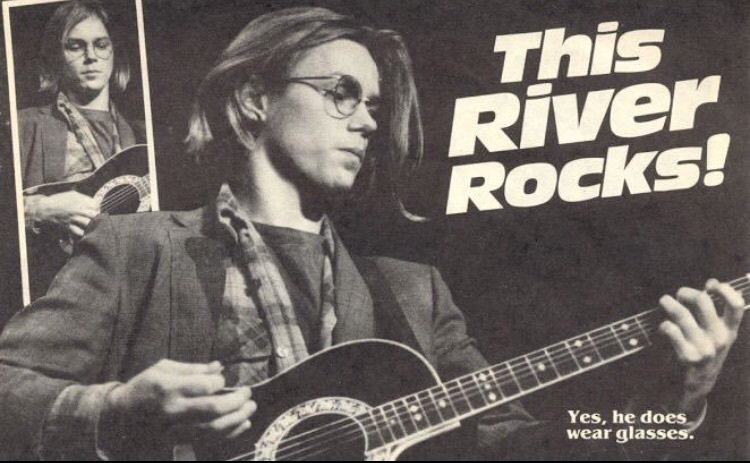
He was bigger than me, I realized. He had been a teen heartthrob, after all, his face plastered on the pages of BOP and Tiger Beat. I wasn’t even the first or the last person who’s put him on this impossible pedestal, who’s listened to his songs and thought she understood him, who’s held on to him as a tragic and dreamy figure. There were many of us who longed for him on the widow’s walks of our minds.

When I turned twenty-four, one of my first thoughts was that I would be older than him forever.

When I got a Spotify account, my iTunes library was left on my hard drive, abandoned and all but forgotten — the Aleka’s Attic songs included. It wasn’t until earlier this year, when Joaquin Phoenix had mentioned his brother during his Oscars speech (he and River were the only boys out of a brood of five) that I remembered they existed and wanted so suddenly and so badly to hear them again.

I typed the band’s name into the Spotify search bar, thinking I’d probably get nothing. But then there it was, an official artist page listing three of the songs I’d known and grown up with. Rain Phoenix, River’s bandmate and sister, had finally let them see the light of day after the band’s activities were cut short following her brother’s death.

River Phoenix is on Spotify, for real this time.

There was “Where I’d Gone,” a day-in-the-life kind of song that grew more unhinged as it progressed. There was “Scales & Fishnails,” a brief and dreamlike interlude I’d once imagined playing at my wedding someday. And there was my favorite of all, I couldn’t believe it was there, “In the Corner Dunce” — which River had written and recorded when he was eighteen and feels like the most authentic piece of himself he’d ever left behind, singing like it hurts and like it matters: I rarely get to feel, you know, I hardly ever feel in place.

I’ve read that Rain Phoenix hopes to continue releasing the rest of the tracks, completing the album that was once meant to be called Never Odd or Even. I hope it includes another favorite, “Note to a Friend.” A lone guitar chord, and then River sings: My days are heavy on the inside of my night. Rain joins in, and together they sing of better days about to come. The verse repeats, and so does the refrain. Once, and then again: Better they come, better days come.

He’s been gone so long. And yet he lives on years and years later through this small thing — an official release, the kind his band never got to have, on something so modern and so now, anachronistic in the best way.

So strange, and yet so welcome. Like that summer all over again, having him come alive once more like it was for me and me alone — only this time, I know I’m not alone, and I can’t wait to share it with anyone who’s willing to listen. This is River Phoenix, I would tell them. You can’t find many traces of him anymore, but he’s right here.